Over the past decade, a new type of welding technology has been gaining traction among larger manufacturers that rely heavily on manual GMAW to produce their products. The technology – weld sequencing – is being adopted to ensure quality control and reproducibility across welds and parts.
Using the production of automotive exhaust components as an example, weld sequence software is used to control manual weld settings and weld steps. The software integrates with the power source and production cell or tooling. This brings a level of quality control typically associated with robotic welding into a manual welding production environment.
The overall goal has been quality control in high-volume production settings, but the underlying benefits are often overlooked. Due to the required integration, expert-level IT needs, development time and overall complexity, general fabrication shops across the country have largely been left out of the weld sequencing conversation.
Various online estimates put the number of metal fabrication shops in the United States at around 50,000 with nearly 1.5 million people being employed. Rough estimates suggest smaller shops, those with fewer than 10 welders, account for around 12,000 companies supplying metal parts, often fabricated through welding processes. Anyone who owns or works in one of those shops knows firsthand the high mix of parts being made for a variety of customers, all expecting the best quality, fastest delivery and lowest cost.
So, while the concept of weld sequencing for the general fabrication shop has largely gone unnoticed, the trend is changing. The original technology was focused on policing the welder, ensuring quality and controlling every step of the process. Now, it is looked at as a digital way to apply standard operating procedures (SOPs) to the products being built that helps achieve quality and consistency.
Productive guidance
If your shop builds parts in batches for customers – whether monthly, quarterly or annually – how do you ensure consistent quality while keeping costs low? It means limiting scrap, rework and setup time – all the usual margin killers. And you still need to deliver on a tight timeline. The answer is weld sequence software that gives your welders step-by-step instructions in real time to guide them through their welding tasks to produce the required results.
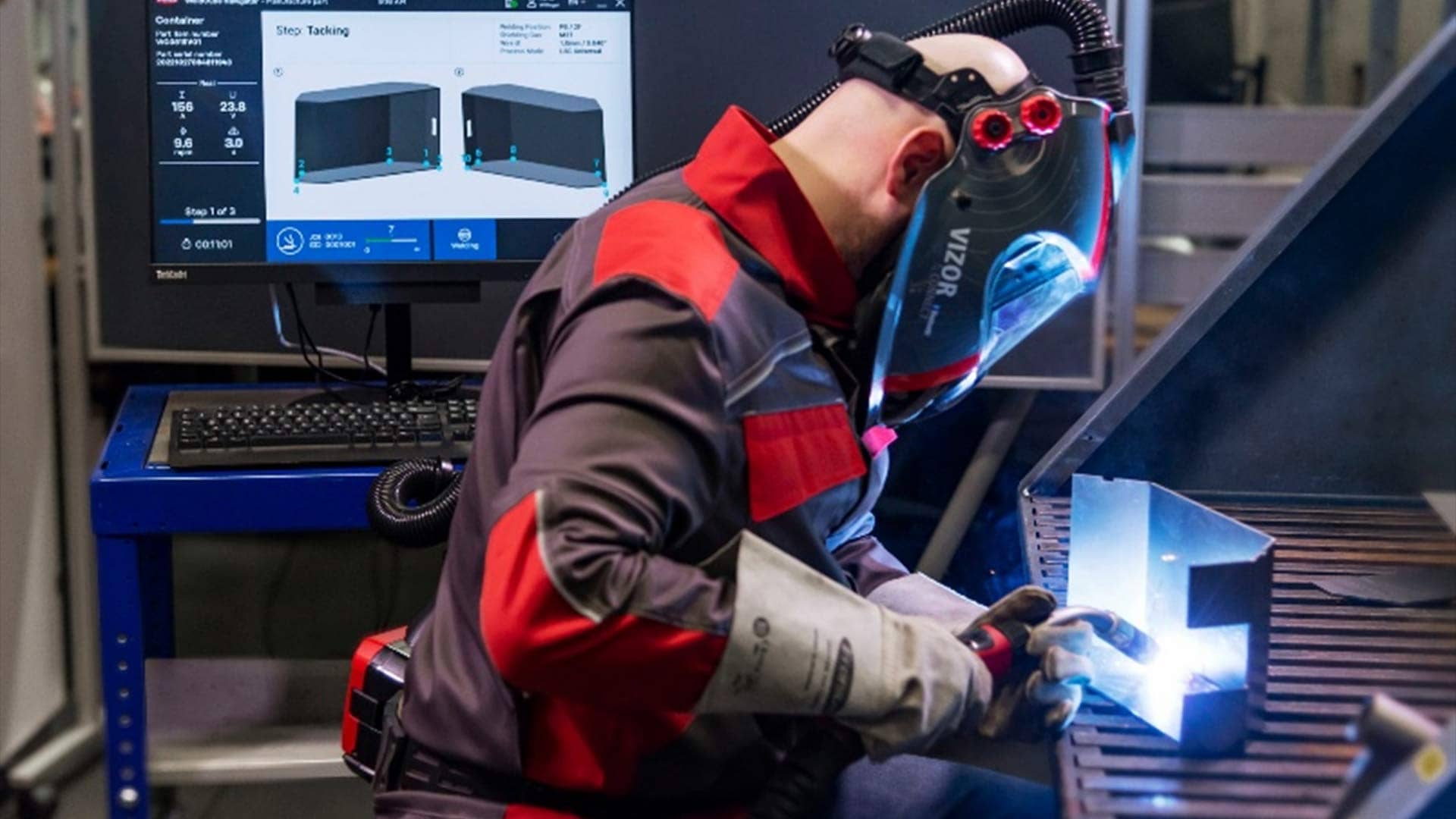
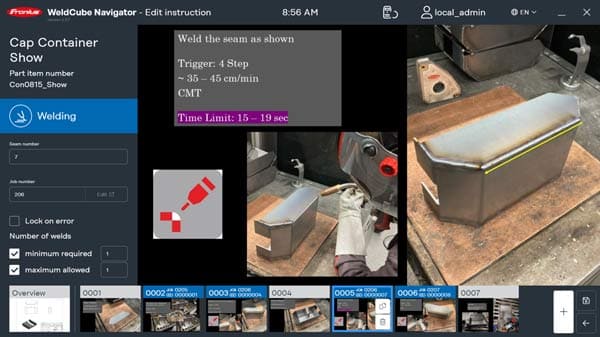
A screen shows each weld step visually in order and the parameters are automatically set on the welding system. This makes it easy for welders to follow the correct weld sequence and ensures the defined parameters are used for each weld. They also receive feedback on their welds and can monitor their progress. The weld sequence steps are to:
- Create weld settings and store them as jobs on the machine
- Take photos of the parts for reference
- Highlight any special steps to be taken, such as welding in a certain direction or creating a sequence that minimizes distortion for better quality and less rework or scrap
- Add non-welding steps as needed
- Build a sequence with simple point-and-click steps in the software
Welding with sequences is hugely beneficial. It increases production quality in manual welding cells, helps standardize workflows and helps counter high worker turnover. Weld sequencing helps quickly train new welders to steadily produce better welding results.
Simple steps
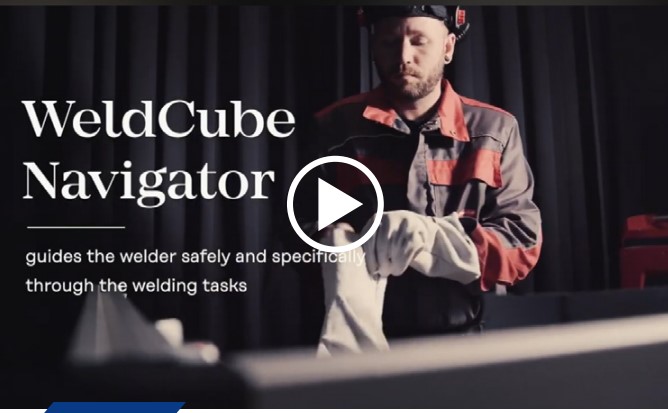
An example of weld sequence software comes with the Fronius WeldCube Navigator. WeldCube Navigator was developed with the general fabrication shop in mind. While it can be deployed for high-volume, complex automotive applications, at its core, it is a simple, step-by-step sequencer. In less than an hour, you can build a program for a part, add instructions for each step with clear visuals, and even create simple GIFs in PowerPoint to illustrate steps in more detail.
By investing in that hour, you can start building a library of parts where you deploy SOPs to the shop floor, providing clear communication to your seasoned welders whose input on the steps and settings helps the team succeed. For newer welders, the fear of welding a part wrong or turning out scrap starts to subside. Your team wants to win and creating an SOP with a weld sequencer gives them the tools to do it.
Shop support
One hurdle to overcome is the fear that this technology is “the police,” or just another way to control everything the welder does. But what if the weld sequence – and keeping steps consistent across welders, batches and production runs – is just as important, if not more important, than the weld settings or a beautiful weld seam? The challenge is real, but when the team is involved in the development and deployment, those fears start to subside.
The weld sequence software can be loaded to multiple PCs. Anyone on your team can create the files – it is a straightforward and simple point-and-click process. You can create the files in your office and then load them to the shop PC or do it all on the shop PC. The workstation requirements are:
- An off-the-shelf PC with an Ethernet port and mouse; mini PCs work well
- A monitor, preferably a touchscreen version large enough for comfortable workstation interaction
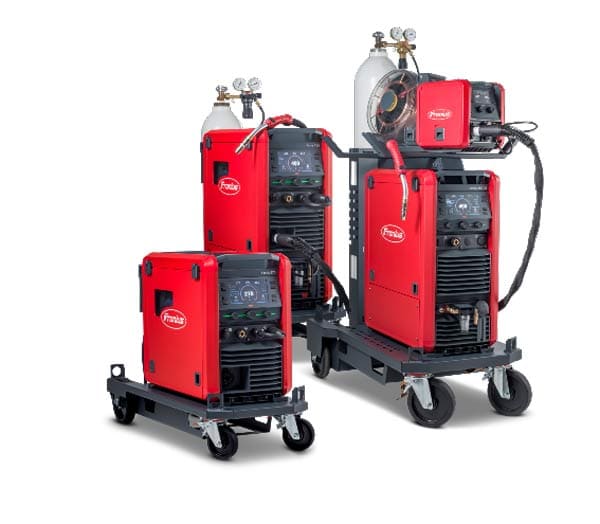
- Any Fronius Fortis machine with a few options activated, an up/down torch and a key card reader (sold separately). All Fortis machines come with a built-in Ethernet port
- An Ethernet cable
The challenges that thousands of fabrication shops face every day can be daunting, but focusing on each issue one step at a time will set them up for success. Manual welding challenges can be overcome by deploying technology that is simple to use and effective. It provides a tool where all your parts are documented with useful information you can rely on for years to come.
Stay in-the-know about the latest welding technology by researching our extensive welding archive.