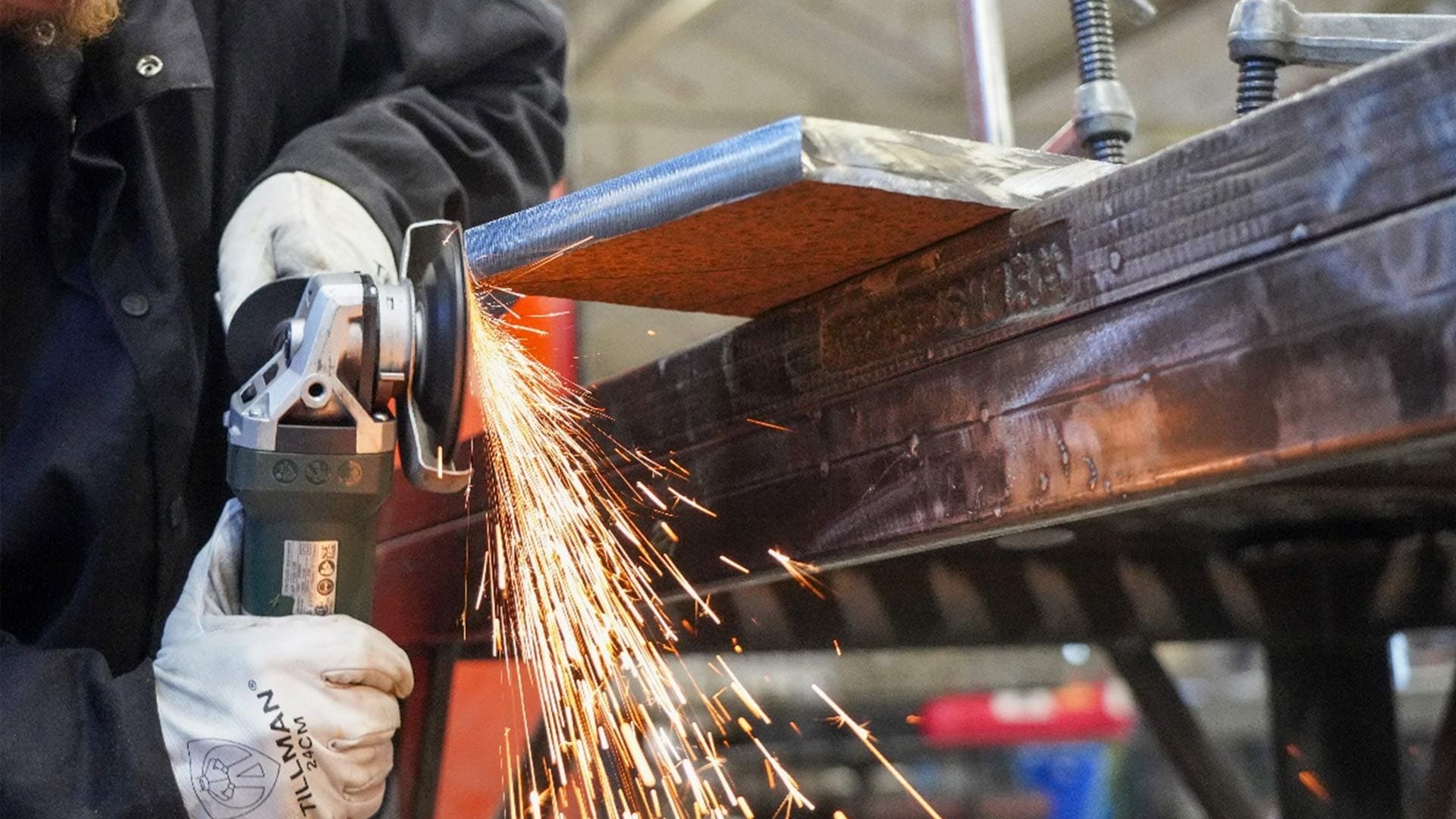
In metals manufacturing, abrasive selection isn’t as simple as choosing the product with the fastest cut rate. Performance depends on the workpiece material, the power tool, the operator’s technique and the abrasive’s ability to maintain its cutting action over time.
In recent years, the use of precision-shaped ceramic grains has become an important development in abrasive products. In the right application, coated abrasives with these grains help manufacturers increase throughput, improve process consistency and reduce operator fatigue. To make the most informed decision for the job, however, requires a short study in precision-shaped grain technology and coated abrasives.
There, perhaps, is no better way to learn about a new topic than through case studies. The first case study highlights how one manufacturer benefited from a coated abrasives switch. The second – in a bit of a reversal – relays how a bonded abrasive with precision-shaped grains wasn’t working for a repair shop, but zirconia aluminum abrasive products delivered better value and results.
Interested in precision
Before diving into the case studies, though, it’s helpful to understand what a manufacturer might experience using conventional abrasives that feature grains with irregular shapes and cutting edges. On average, the result is slow cut rates, premature wear, heat discoloration and changeover time that all cost money, time and labor.
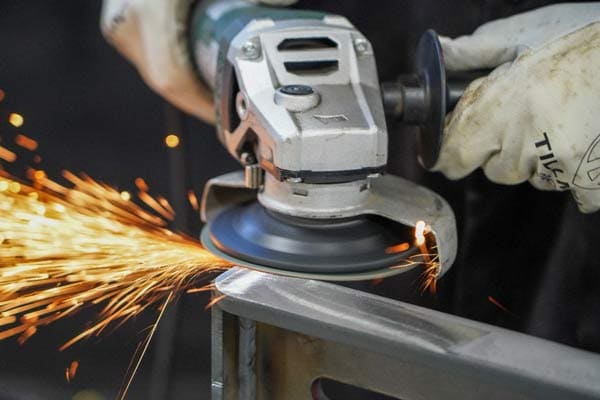
Precision-shaped ceramic grains, however, are engineered with more controlled geometries designed to penetrate the workpiece and cut efficiently to deliver an exceptional cut rate. Precision-shaped grains stand upright and micro-fracture in a controlled manner, continually exposing fresh, sharp cutting edges. This self-sharpening action helps maintain cutting performance throughout the abrasive’s life. Operators get better control, reduced vibration and more consistent results, especially when working with demanding materials.
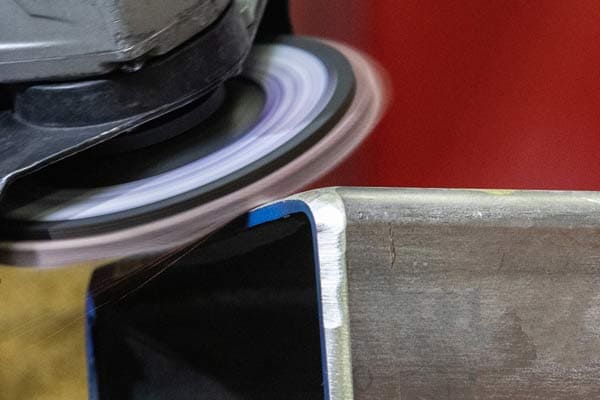
Coated abrasives are particularly well-suited to precision-shaped grain technology, such as with Weiler Abrasives’ Tiger 3D Max line of ceramic resin fiber discs, flap discs and blending discs. The abrasives are manufactured by attaching the grains to an adhesive backing material. Because the grains are applied to a surface, instead of used in a hard matrix, the manufacturers can better control their orientation and position. The design also optimizes grain retention, extending disc life and ensuring shops get the most for their money. Grain retention is key to getting the most out of an abrasive.
“Our precision-shaped grains have a very specific shape that’s very controllable and repeatable,” says Michael Zulauf, product manager, Weiler Abrasives. “When we put that repeatable consistent shape onto a coated abrasive substrate, it provides consistent, rapid cutting because each grain cuts a large chip.
“With a high-performance, expensive grain, we need to make sure it properly adheres to the backing – it really comes down to the adhesives and the coatings,” he adds. “It’s important to keep it bonded to the substrate so that it can continually break down. Precision-shaped grains provide a big increase in cut rate. But our products also wear gradually, which seemed to be a shortcoming on some of the competitors’ products. Manufacturers that upgrade to a better product might spend a little more, but they make up for that in happy workers and better productivity.”
Real-world return
For proof in the pudding, a heavy-duty truck accessories manufacturer in South Texas provides an example of how a new ceramic abrasive can improve a grinding process. The manufacturer processes more than 40,000 lbs. of steel each day. With a commitment to near-zero rejection rates and a reputation for durability, they needed grinding performance that could keep up with production without compromising quality.
They were using a premium 36-grit ceramic resin fiber disc from a major competitor.
Weiler brought in a 3D Max ceramic resin fiber disc and tested it against the competitive solution. Testing showed better grain retention and demonstrated roughly 1.5 times longer disc life with the 3D Max. Operators noticed the difference, too. They reported smoother grinding performance and preferred the scuff pattern the 3D Max left on the workpiece.
In taking a closer look at their grinding process, Weiler identified another area of the process that was being overlooked. After spending time on the floor, watching operators grind bevels, create uniform edges and clean up welds after assembly, Weiler determined the backing pad wasn’t right for the ceramic abrasive.
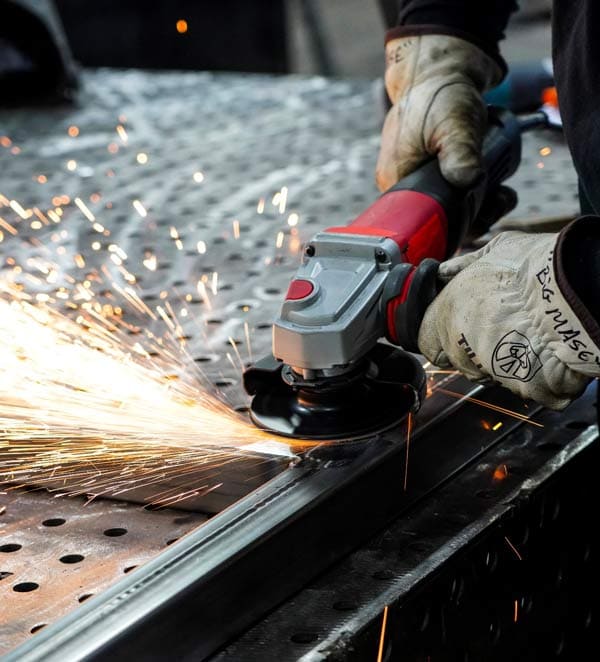
Ceramic abrasive needs sufficient pressure to fracture the grain and expose fresh cutting edges. The existing backing pad wasn’t providing the support needed for the ceramic abrasive. Without the proper backing pad, the abrasive wasn’t being used to its full potential. Discs could load, shortening usable life and increasing consumption.
Weiler recommended a harder backing pad better-suited to the application and helped the operators with their grinding technique.
With the right disc, backing pad and grinding technique working together, the manufacturer improved productivity and lowered abrasive costs while maintaining the quality standards its reputation depends on. They experienced 32 percent more material removal and reduced projected annual consumption by 8,400 discs. The changes were associated with $53,500 in projected annual savings. After seeing the value the Weiler team brought, they began asking for help with other applications.
In the real world
With bonded abrasives, the abrasive grains, such as zirconia aluminum or ceramic, are loaded in a resin matrix that holds them together as the grinding or cutting wheel wears. The manufacturer can’t control the orientation of individual grains in the same way it can with a coated abrasive.
“Bonded abrasives are self-sharpening, but they’re in a much harder matrix,” Zulauf says. “They are much more aggressive regardless of how hard the operator pushes.”
In the second real-world example, zirconia aluminum abrasive wheels delivered better value with improved cutting efficiency and longer wheel life. At a Seattle marine transportation and container repair operation, an experienced operator believed the shop’s premium precision-shaped ceramic grain bonded wheels were the right choice. While Weiler respected the operator’s experience, they invited the shop to test its Tiger Zirc grinding and cutting wheels under the same conditions during real container repair work.
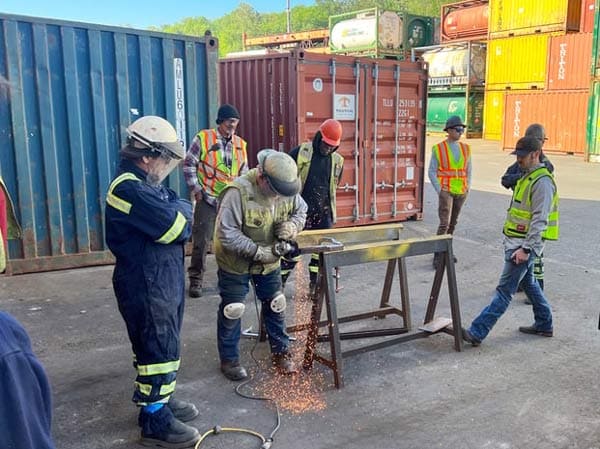
Weiler wanted to demonstrate that the Tiger Zirc wheels could deliver a measurable improvement, not simply offer a lower purchase price. Therefore, the team compared wheel life, working speed, labor impact and annual cost – not the price alone. The results showed the Tiger Zirc wheels delivered longer life and lower projected operating costs than the premium competitive products tested in the application.
Together, the change is projected to save the company $108,000 annually in material and labor costs. The 4 1/2-in. Tiger Zirc grinding wheel was tested against the competitive precision-shaped ceramic grain bonded wheel on 1/2-in. channel and produced seven times the life, recovering 1,190 labor hours. The 4 1/2-in. Tiger Zirc cutting wheel cut farther than the competitor’s 5-in. wheel in a straight-line channel test. It produced a 6 percent higher calculated cut rate, and 1,151 fewer cutting wheels are projected to be used annually.
Finding the best solution
“Ceramic isn’t always the end-all be-all,” Zulauf says. “I think that’s one of the points of the second study. They were using a competitor’s product that was ceramic, but for various reasons – probably the bond – they weren’t achieving good wheel life and were basically wasting expensive ceramic grains. The Weiler team would’ve brought a couple options but started with the Tiger Zirc because zirconia micro-fractures to a degree, and our product offers long wheel life. The Tiger Zirc outperformed the competitor’s wheel so the team helped the shop solve a problem and that, in turn, helped build a long-term relationship.”
The study also illustrates the value of involving operators in product testing, which helped establish confidence in the change. Once the data showed a clear improvement, the operator supported the Tiger Zirc change and became an advocate for evaluating Weiler products in additional applications.
The approach also proved how important it is to optimize the process around the abrasive being used. An abrasive that underperforms because the setup is wrong may be incorrectly judged while a well-matched abrasive can reveal savings that were previously overlooked.
“The customer is the expert – they know more about their processes than we do,” Zulauf says. “When we go in, we want to learn as much as possible without making any judgments. Then, we can suggest some improvements. But it isn’t just the abrasives themselves. We look at the power tools they’re using, how they’re using them, the material, everything. One key question we ask the customer is what their goal is and what they’re really trying to achieve.
“Honestly, a lot of manufacturers are set in their ways and afraid of change so we try to have the right attitude,” he says. “We encourage them to follow the data and the results before making any decisions. It takes patience on our end. The process doesn’t happen overnight. We’ve been working on one project for several months now. The competitive product the customer had used was discontinued and the new one wasn’t as good. Customers tell us that they ‘can’t get the guy on the phone’ or ‘he won’t come out here,’ but we’re willing to do that.”
The right abrasive choice depends on the material, the tool, the work being performed and the results measured on the shop floor. For manufacturers seeking to improve productivity, the goal should be to select an abrasive that delivers the best total value, not simply the most advanced grain technology. An unbiased evaluation that considers both product performance and process conditions can help manufacturers make more informed decisions about whether premium abrasives offer a good ROI.
This article originally appeared in Modern Abrasives & Deburring, an insert that is published in each of Techgen Media’s mainstay magazines. To receive abrasive information right in your inbox, subscribe to any of our magazines today.