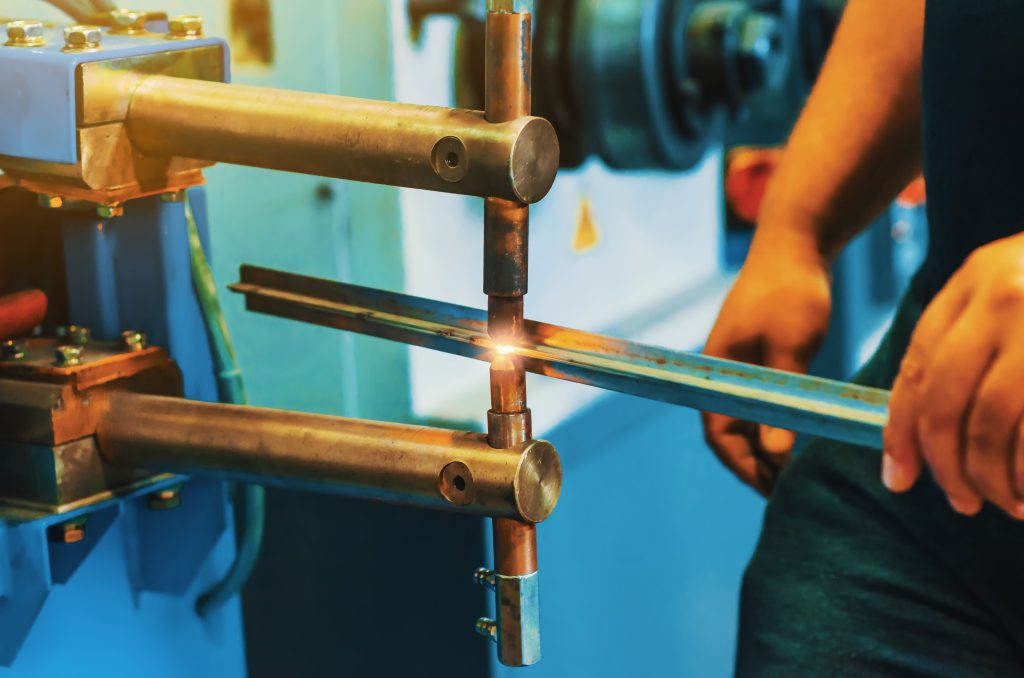
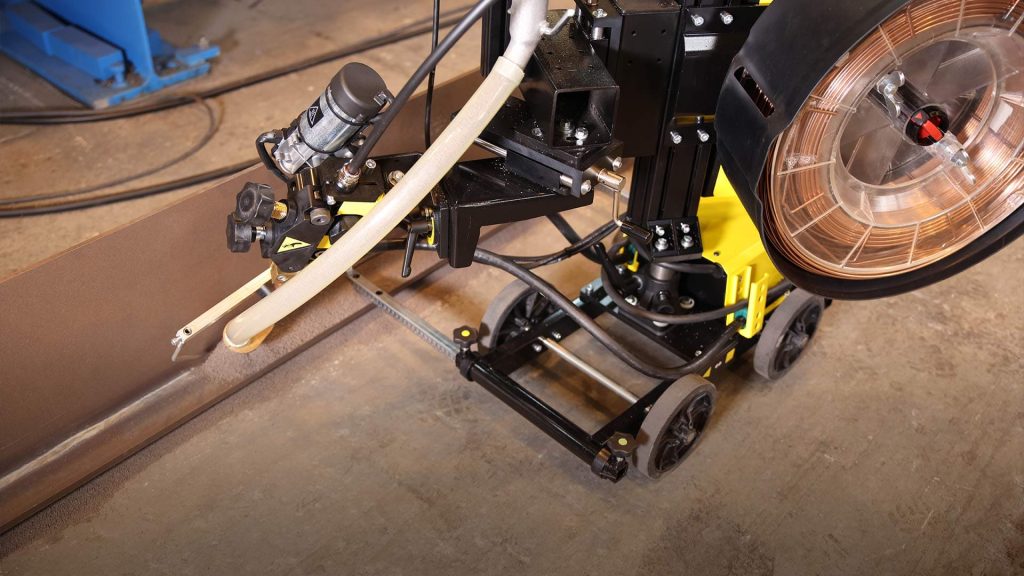
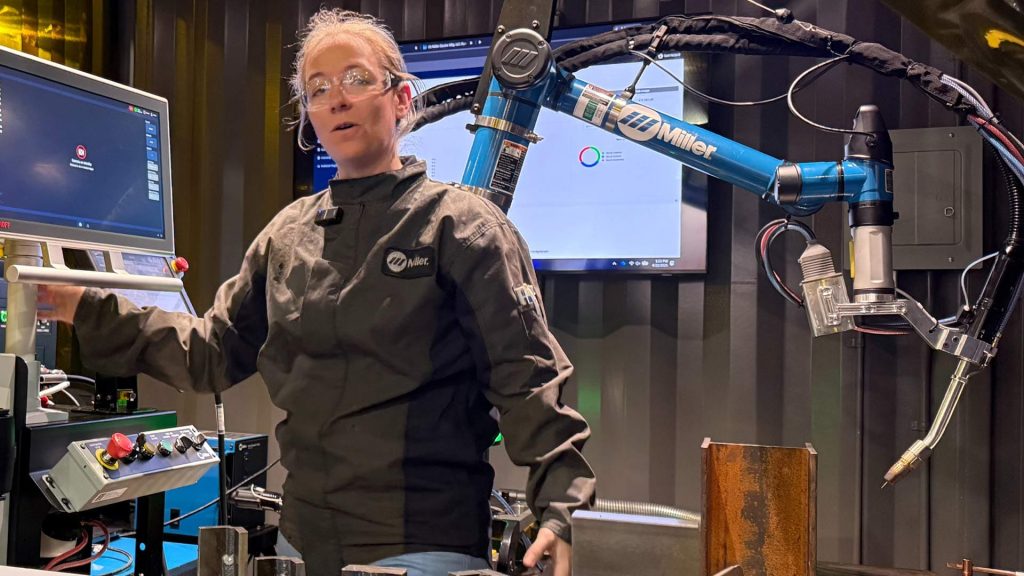
Every day, manufacturers and industrial companies of all sizes face a variety of operational challenges that impact productivity, efficiency and profitability. Some of the most common concerns heard from prospective customers include: We need to increase throughput. Nobody wants this job. We can’t find enough skilled welders. Rework is costing us too much time and money.
As these issues continue to persist, automation and robotic solutions have become the go-to strategies for companies looking to improve their processes and overcome challenges to increase competitiveness. The adoption of robotic systems can lead to increased efficiency, reduced reliance on manual labor, improved quality control and enhanced workplace safety.
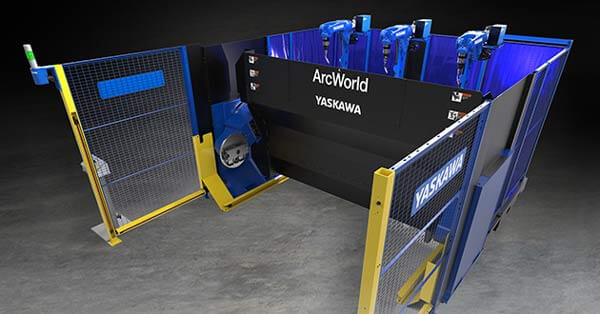
However, implementing robotic automation is not always straightforward. Designing a complete robotic system can require extensive engineering to ensure it is space-efficient, user-friendly and safe. If each robotic solution had to be designed from scratch, the costs, complexity and lead times associated with developing and deploying these solutions would be prohibitive for many companies.
Robotic evolution
The need for efficient and cost-effective robotic solutions is not new. Robotic welding solutions have been utilized in industrial applications like automotive manufacturing since the 1970s, with rapid advancements occurring throughout the 1980s and 1990s. Recognizing the demand for a more streamlined approach to robotic integration, Yaskawa Motoman introduced the first pre-engineered “standard” robotic welding solution in 1990, known as the ArcWorld.
The ArcWorld system was revolutionary because it provided a standardized, turnkey robotic welding solution that included a robot, welding package and indexing positioner. Initially designed to accommodate parts up to about 1 m wide, the system later expanded to accommodate larger and more complex workpieces. This modularity allowed manufacturers to scale their robotic welding capabilities based on their specific part size and production requirements.

A few years later, Yaskawa pioneered another critical advancement – coordinated motion between the robot and external axes. This innovation allowed multiple robots and external axes to be programmed as a single system, ensuring the same level of precision and repeatability as a standalone robot.
By integrating additional robots, manufacturers could extend the system’s reach to handle larger and more complex parts while simultaneously reducing cycle times. This also led to the development of additional positioners for standardized robotic workcells designed to manipulate and rotate parts during welding and other processes, further improving efficiency and flexibility.
Beyond welding
While robotic welding remains a core application for pre-engineered robotic workcells, these solutions have also proven highly adaptable for other industrial processes. Standard robotic cells designed for welding can be easily modified to accommodate a variety of tasks, including material handling, trimming, finishing and quality inspection.
One customer needed a robotic solution for ultrasonic knife trimming where parts were affixed to stationary tooling. An ArcWorld cell was adapted to meet this need by allowing the robot to perform trimming operations while the operator removed finished parts and loaded new ones. No welding involved. Similarly, robotic cells originally designed for welding have been successfully repurposed for applications such as deburring, polishing and post-process inspections using robot-mounted sensors and cameras.
Cell safety
One of the most critical aspects of implementing robotic automation is ensuring safety. Standard robotic cells are designed with built-in safety measures based on rigorous engineering design and comprehensive risk assessments. Organizations such as the Association for Advancing Automation (A3) and American Welding Society (AWS) contribute to the development of safety guidelines that are published with ISO and ANSI standards for robotic cell safety. These can be referenced in the ANSI R15.06 publication.
Risk assessments are an essential component of robotic cell deployment. These assessments evaluate potential hazards within the system and establish necessary and integrated safeguards to protect operators and other personnel. Without proper risk assessments, companies may be subject to OSHA fines and legal liabilities, even in the absence of an incident. Standardized robotic solutions from reputable manufacturers come with pre-conducted risk assessments, ensuring compliance with safety regulations and mitigating risks for end users.
Benefits of standard robotics
The advantages of standard robotic solutions extend beyond safety and compliance. These systems offer several key benefits for manufacturers looking to enhance operations:
- Reduced engineering and deployment time: Because standard robotic cells are pre-engineered, companies can significantly cut down on design, testing and implementation time. This allows for faster deployment compared to fully custom solutions.
- Cost efficiency: Custom robotic systems require extensive engineering and testing, leading to higher upfront costs. Standard solutions provide a more affordable alternative while still delivering high performance and reliability.
- Proven performance and reliability: Pre-engineered robotic cells have been extensively tested in real-world applications, ensuring they meet the most stringent customer standards for durability, precision and efficiency.
- Scalability and flexibility: Standard robotic solutions can be easily adapted and scaled based on production needs. Additional robots, tooling fixtures and accessories can be integrated to accommodate evolving manufacturing requirements.
- Ease of use and maintenance: Standard robotic cells often come with user-friendly programming interfaces and comprehensive documentation, making them easier to operate and maintain.

Future of standard robots
As technology continues to advance, the capabilities of standard robotic solutions will only expand further. Innovations in AI, machine learning and sensor technology are rapidly enhancing the adaptability and intelligence of robotic systems. Future developments will include more autonomous robotic solutions capable of real-time decision making, improved human-robot collaboration, and enhanced data analytics for predictive maintenance and process optimization. Standard solutions will make it easier to adapt these technologies to deployable, real-world manufacturing needs.
Additionally, as labor shortages and the demand for skilled workers persist, robotic automation will play an even greater role in addressing workforce challenges. Standard robotic solutions provide a viable pathway for companies to modernize operations, improve efficiency and remain competitive in an increasingly automated world.
Pre-engineered, standardized robotic solutions have revolutionized industrial automation by offering cost-effective, reliable and scalable alternatives to fully custom robotic systems. From their early adoption in welding applications to their expansion into material handling, trimming and quality inspection, pre-engineered systems have proven invaluable across various industries.
With built-in safety measures, reduced deployment times and flexibility to adapt to changing production needs, standard robotic solutions provide an accessible and efficient way for manufacturers to integrate automation into their processes. As technology continues to evolve, these systems will only become more intelligent and capable, further solidifying their role in modern industrial automation.
When they are not the right fit, custom robotic solutions can still prove their worth and ROI. But, for companies looking to improve efficiency, reduce labor challenges and enhance overall productivity, investing in standard robotic solutions is a strategic move toward a more automated and competitive future.