With an ongoing competitive manufacturing landscape, any manufacturer, large or small, is constantly seeking new ways to boost their production processes, improve safety and increase operational efficiency. Robotic welding technology has significantly advanced since its early adoption, particularly through the adoption of pre-engineered robotic welding workcells.
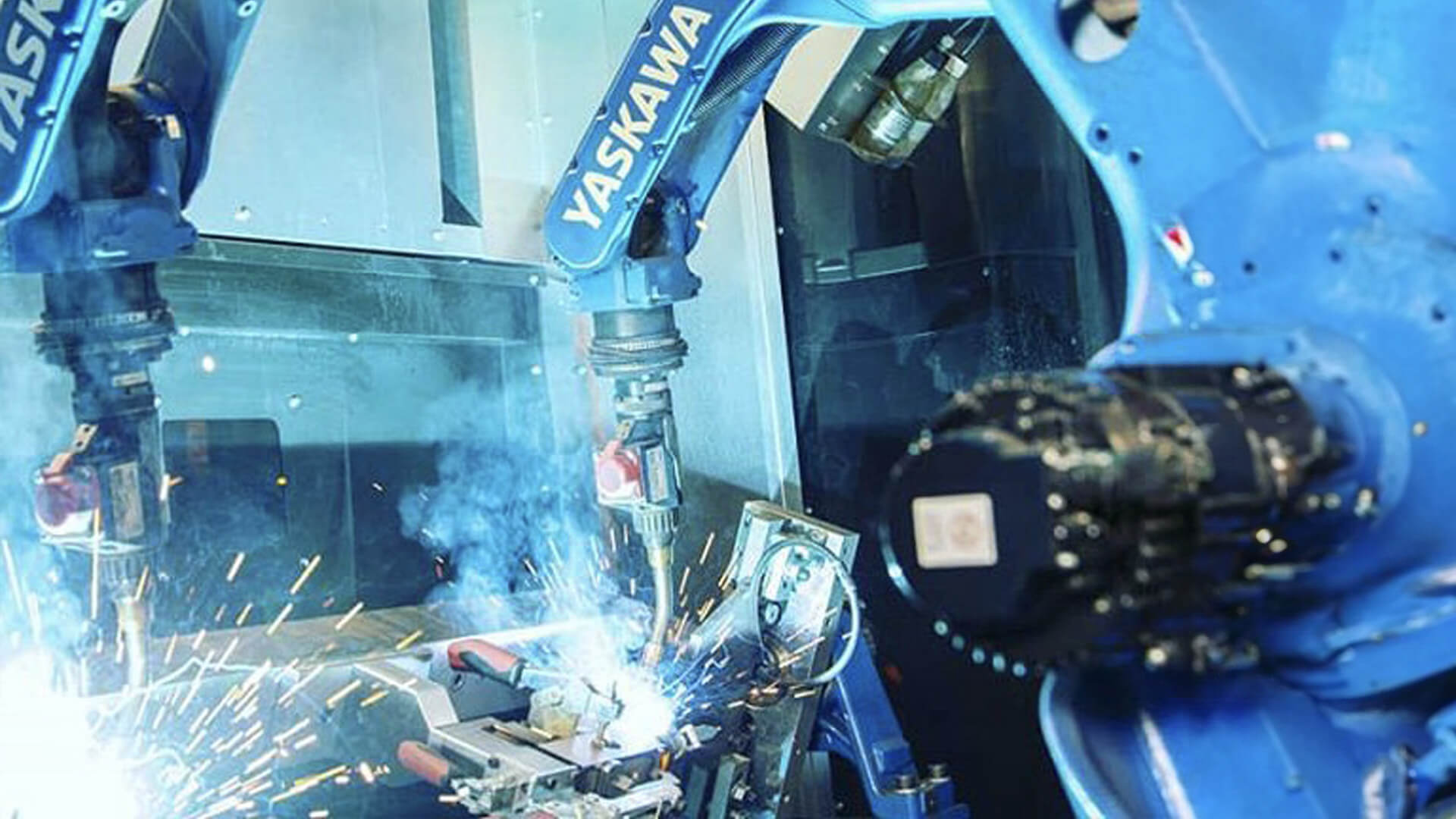
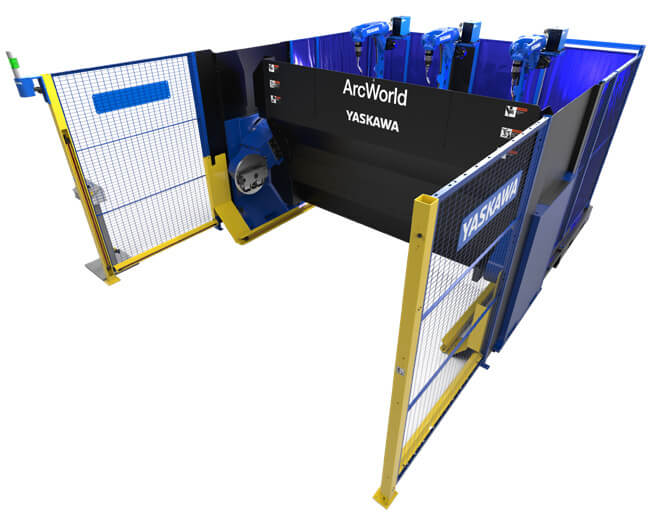
One of the originators in this space from the early 1990s was Yaskawa Motoman and its line of ArcWorld workcells. Standardized workcells like this are popular for their professionally engineered safety, reliability and efficiency. These cells have come a long way over 30 years with the latest iterations offering more modularity and flexibility with matching positioners, further boosting the versatility and performance of robotic welding systems.
Fabricated metals manufacturing is facing a significant workforce shortage that is impacting fabricators and production capabilities across various sectors. The American Welding Society (AWS) provides its estimated welding labor deficit regularly with recent updates that the United States is expected to experience a shortage of 330,000 welders by 2028 with 82,500 average welding jobs to be filled annually from now until 2028.
This is equivalent to almost 50 percent of the number of U.S. welding professionals. The welder shortage is due to a combination of factors, primarily an aging workforce and lack of skilled new welders entering the workforce.
This shortage of welders, whether skilled or new, has prompted many companies to at least explore automation as a viable solution to mitigate the risks of the labor gap. Fabricating leaders are trying to find ways to duplicate the efficiency of their current staff. By adopting robotic welding systems, manufacturers can overcome their labor woes while increasing overall profitability, efficiency, safety and quality plus better retention of their highly valued welding team.
Rise of welding automation
The adoption of welding automation has always been steady with larger corporations. However, it has been on a steep incline recently in the United States amongst small and medium-size enterprises, as well, driven by the need for competitive pricing, consistency and the ability to overcome labor shortages while achieving reshoring goals. According to a report by the National Robotics Education Foundation, approximately 40 percent of American manufacturing companies have implemented or are planning to implement robotic welding systems in their operations (National Robotics Education Foundation, 2022).
The key industries that are leading the charge in adopting welding automation include:
Automotive: The automotive sector has been the primary trendsetter in adopting a significant amount of robotic welding due to the consistent high volume of production and the need for precise, high-quality welds, especially in safety-critical parts. Robotics streamline the welding of complex assemblies and ensure traceable consistency across millions of units.

Heavy equipment manufacturing: Industries involved in the production of heavy equipment, such as agricultural, construction and mining machinery, benefit from robotic welding due to long arc-on times on high-deposition welds that demand structural integrity. Such environments can be both dull and dirty for workers, often making it difficult to retain welding talent.
Aerospace: Aerospace manufacturing requires precision weld quality to meet stringent weld specifications and certification testing for crucial reliability. Robotic welding systems are being used more and more to join a variety of metal components of aircraft and spacecraft. These components have been an automation challenge in the past due to short production runs with high-tech alloys, but new and standardized welding technology has made this more feasible.
Fabrication and metalworking: For general metal fabrication and custom or contract metalworking, robotic welding provides the flexibility to handle diverse and complex parts with efficiency, improving throughput and reducing manual labor with limited programming required and the ability to save robot jobs for future use.
Pre-engineered cell benefits
“Safety first” is more than an idiom in any manufacturing environment. Especially in welding operations, factors like high temperatures, electrical shock risk, arc flash and potentially hazardous fumes expose workers to real health risks. Pre-engineered robotic welding workcells, such as ArcWorld cells, are designed with integrated safety features to mitigate these risks and liability.
Standardized workcells come with built-in safety mechanisms including protective enclosures, safety interlocks and advanced sensing technologies. The cells are outfitted with arc screens and barriers that protect nearby human operators from the ultraviolent light and sparks generated during the welding process. Also, the integration of advanced sensors and cameras allows for real-time monitoring and adjustment, ensuring that any deviations or anomalies are quickly addressed, thereby reducing the risk of accidents and improving overall workplace safety.
Reliability in welding operations is critical to maintaining consistent product quality and minimizing unplanned downtime. Pre-engineered systems are designed with reliability in mind, incorporating proven components and robust engineering to ensure long-term performance.
The components in ArcWorld workcells are subjected to rigorous testing and quality control measures before they are deployed as a standard product. This comprehensive testing process and working with component suppliers ensures that the systems are not only capable of performing complex welding tasks with precision but are also durable enough to handle the rigors of continuous operation. By investing in a pre-engineered system, companies benefit from reduced maintenance requirements and fewer unexpected breakdowns, leading to more stable production schedules and lower operational costs.
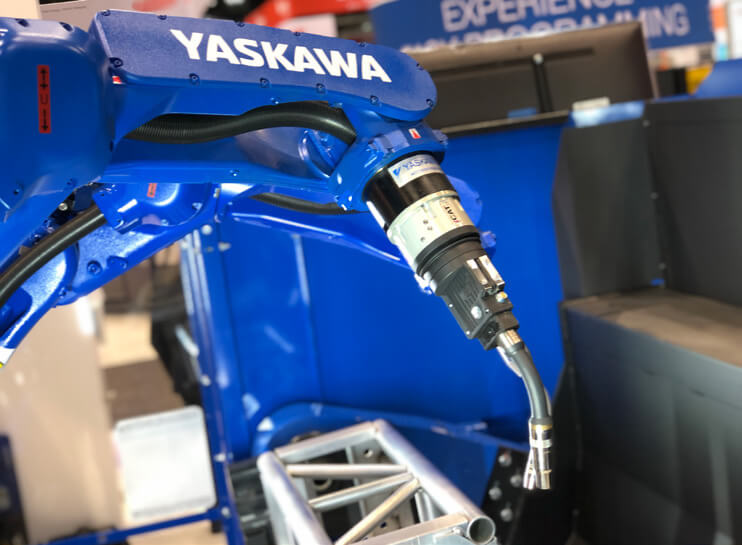
Increased efficiency is a primary driver of productivity in metals manufacturing. The pre-engineered nature inherent to standard systems like ArcWorld workcells immediately contributes to operational efficiency in a few ways:
Reduced setup time: The workcells are pre-configured and tested, which means they can be quickly installed and integrated into existing production lines. This reduces the time needed for setup and calibration, allowing companies to ramp up production faster.
Optimized workflow The workcells are designed to streamline the welding process with optimized robot movements and workflow configurations that minimize idle times and maximize throughput. This leads to higher production rates and better utilization of resources.
Consistent quality: The repeatability of robotic welding ensures that each weld is consistent, reducing the need for rework and quality control interventions. This consistency renders higher quality products and fewer defects.
Add in positioners
Yaskawa’s RM2 series of Ferris wheel-style positioners represent an ongoing improvement in part handling designs, offering a modular swing arm and component design that can handle multiple payload capacities to meet a wide range of cycle time and tooling size requirements. Here are four ways the positioner enhances the performance of robotic welding systems:
Enhanced workflow and ergonomics The Ferris wheel design minimizes floor space and reduces pinch potential from legacy “H-Frame” designs, which also improves the accessibility for the operator loading parts during the welding process. An operator can load and unload parts on the operator side while the robot welds parts with full coordinated motion between robot and part-turning positioner axes. Full overhead crane access and positioner lock pins allow for swapping out tooling or large parts without disturbing the parts being processed.
Modular design: The positioner features a modular design that allows for easy customization and scalability. With tooling spans from 1.5 m to 5 m and diameters from 1.3 m to 1.9 m, this size and even payload modularity enables companies to adapt the positioner to their specific requirements without the need for extensive modifications. Whether dealing with small, intricate parts or large, heavy components, the positioner can be configured to handle various payloads and tooling setups.
Flexible payload capacities: The RM2 series is designed with appropriately sized servo motors and fully sealed reducers to accommodate different payload capacities and minimize maintenance, offering flexibility that is essential for manufacturing applications. Each combination is tuned for maximum speed and reliability.
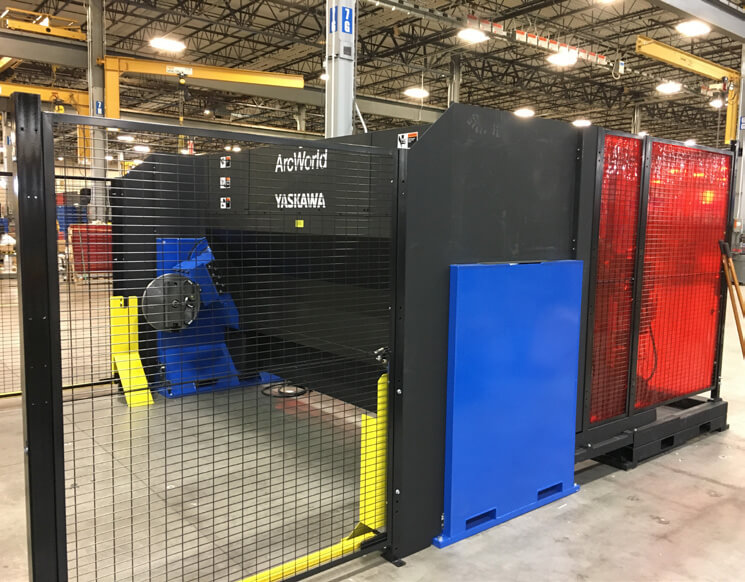
The 750-kg capacity is ideal for lighter parts and tooling. This configuration is suitable for tasks that require precision and agility without the need for the heavy-duty support.
The 1,275-kg capacity is well-suited for medium-size parts and tooling, providing a balance between payload capacity and maneuverability.
The 2,850-kg capacity is for heavy-duty applications. This configuration is capable of handling large and robust components. The high capacity ensures that even the most demanding tasks can be managed efficiently.
Simple setup: Yaskawa had patented the MotoMount tooling compliance device with the goal of taking beam stress off a positioner headstock, tailstock and tooling, especially in circumstances where flooring or setup tasks did not ensure perfect alignment. That design has carried forward to the main trunnion axis of the Ferris wheel positioner to further take any beam stress off the positioner main axis and arc shield for wider span positioners. This ensures easy setup, quick tooling swaps and long reliable use of the reducers used in the gearing system.
Pre-engineered robotic welding workcells, like ArcWorld cells with the new RM2 Ferris wheel-style positioner, represent a significant leap forward in welding technology and accessibility. These systems offer measurable benefits in safety, reliability and efficiency. By incorporating advanced safety features, ensuring reliable performance and optimizing production efficiency, these systems address the key challenges faced by modern manufacturers.
The positioner, with its modular design and multiple payload capacities, further enhances the versatility and functionality of robotic welding systems. It enables manufacturers to handle a diverse range of components and adapt to varying production demands, making it a valuable addition to any welding operation looking to automate.
As the welding workforce shortage continues to grow and industries increasingly adopt automation, understanding these benefits can guide company owners in making informed decisions. The combination of ArcWorld workcells and RM2 Ferris wheel-style positioners offers a robust solution that can elevate production capabilities, ensuring safety, reliability and efficiency in today’s dynamic manufacturing environment.