
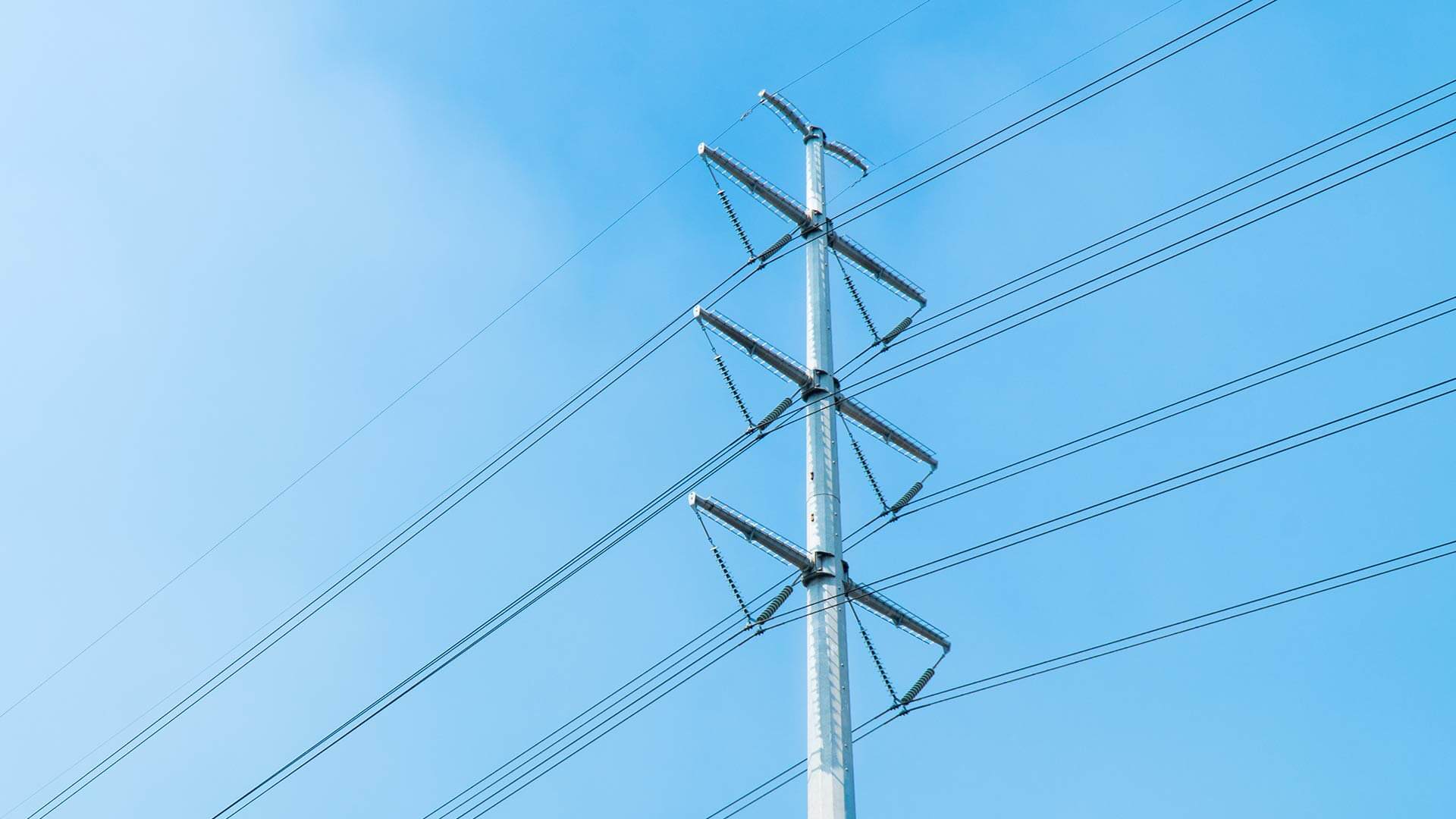
Back in September 2024, the U.S. Department of Energy released Utility Pole Maintenance and Upgrades, an informative report focused on the opportunities available for upgrading the U.S. electrical power grid. The report discusses the scale of the country’s electrical infrastructure needs as well as the grants and funding available to support them.
According to the report, the United States has an estimated 180 million utility poles. About 130 million of those poles are made of wood, were installed decades ago, and are now approaching or exceeding their expected service life. Thanks to bipartisan efforts, however, the Grid Resilience Utility and Industry Grants program provides the grants and funding needed to modernize the electrical grid and lessen the impact of extreme weather. The program offers up to $2.5 billion over five years to eligible entities like grid operators and utilities to prioritize projects that improve electrical infrastructure reliability and, in turn, reduce service disruptions.
Transitioning to steel
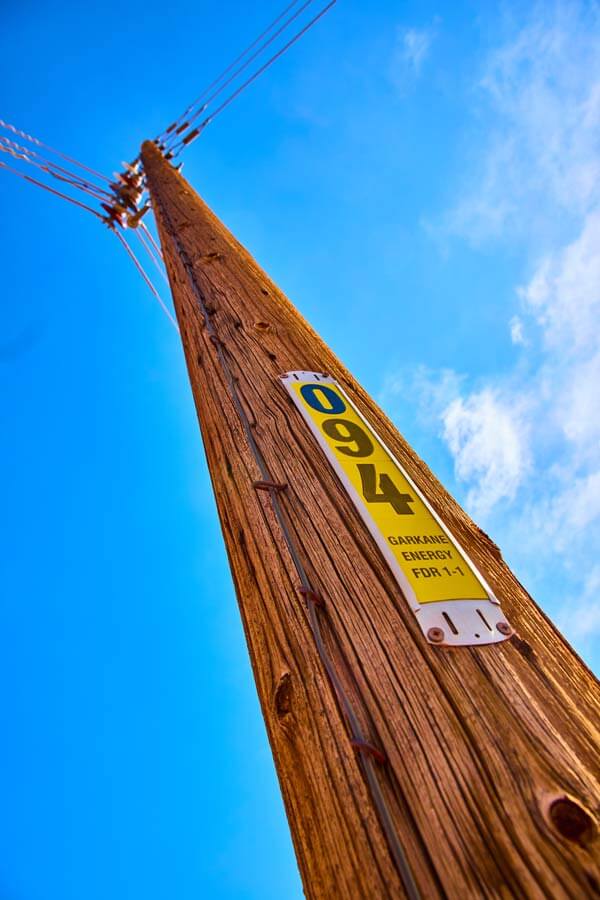
Wooden utility poles have long been the default choice because of their low upfront cost, but their limitations are hard to ignore. Americans see these poles in major disrepair all across the nation. The wood is susceptible to rot, decay, insects, wildlife damage and fire, and many of the poles have been in place far beyond their typical service life, which is often cited in the 30- to 50-year range.
Steel utility poles, however, offer a compelling alternative as they can withstand higher wind speeds, are fire resistant, and are not vulnerable to decay or insect damage. Even better, their average service life is estimated at about 80 years. For utility companies, taking advantage of the grants available to produce steel poles is an attractive endeavor. In addition to upgrading the ever-crumbling electrical infrastructure, steel poles ultimately reduce the overall requirements for maintenance and replacement.
For U.S. manufacturers, these opportunities represent more than an electrical infrastructure upgrade; they represent major production and revenue opportunities. Replacing even a fraction of the wooden poles translates into the production of millions of large steel structures – structures that must be formed efficiently and consistently.
And that is where advanced forming solutions, such as Ursviken’s tandem press brake systems, enter the picture – enabling fabricators to meet growing demand while maintaining tight tolerances, high throughput and long-term structural integrity.
Producing poles
“The infrastructure package that passed a few years ago is coming to fruition now, and we’re getting bombarded with current customers that have been doing this type of work for years,” explains David O’Neill, North American sales manager at Ursviken, “but we’re also being approached by new companies. And not just from the United States – this work is in super high demand in Canada and Mexico, too.
“Our machines can take a year to a year and a half to commission, so there’s a lot of planning involved,” he adds. “But everybody needs the type of technology we offer – we can make a steel pole in 7 min., which is a huge improvement over the way it used to be done. In the past, it probably took three to four times longer to make the same type of pole.”
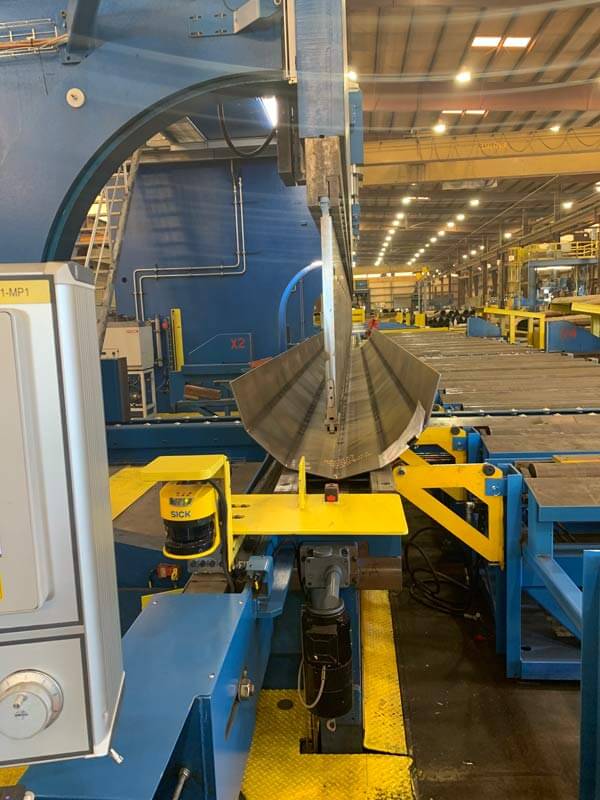
With Ursviken press brakes and proprietary technology, steel poles can be fabricated quickly using a specialized forming process that differs from the conventional flat sheet bending typically associated with press brakes. Unlike typical press brake work, pole bending focuses on producing long, tapered structures – the utility poles, lighting poles, distribution poles and transmission poles that the electrical infrastructure needs.
O’Neill says the process begins with large flat steel plate, typically measuring up to approximately 64 ft. long and 8.5 ft. wide. Material thickness generally ranges from about 0.5 in. to more than 1 in., depending on the pole design. Each plate is transformed into a tapered, cylindrical pole through a series of precisely controlled bends rather than a single forming operation. Accuracy is critical because the poles are often welded longitudinally before being installed in demanding outdoor environments.
Because of the size, thickness and taper involved, pole bending is usually performed on Ursviken’s Optima series press brakes in a tandem system. When pairing two press brakes into a single system, Ursviken ensures that the connection is flawless in order to avoid uneven bends. Together, the tandem press brakes deliver between 2,200 and 4,400 tons of total forming force and can measure roughly 60 ft. long.
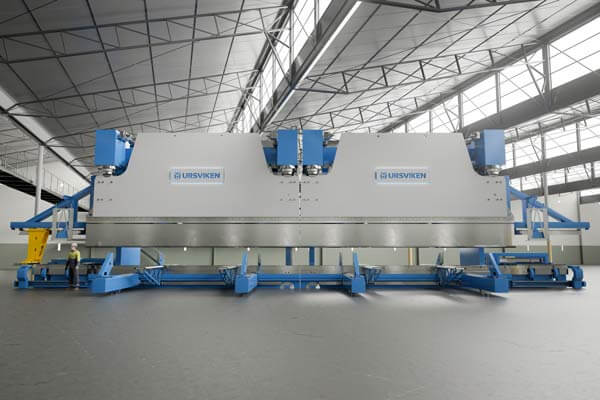
“The Optima series is made stronger than average press brake frames because we build them with A572-50 grade steel,” O’Neill says. “Typically, we see competitive machines made from A36 grade steel. The choice of material is important because all types of bending can put a great deal of stress on the machine frame. Over time, a weak frame will fall out of alignment, which leads to losses in accuracy. When you spend millions of dollars, you should be able to expect a long machine lifetime.”
Intuitive process
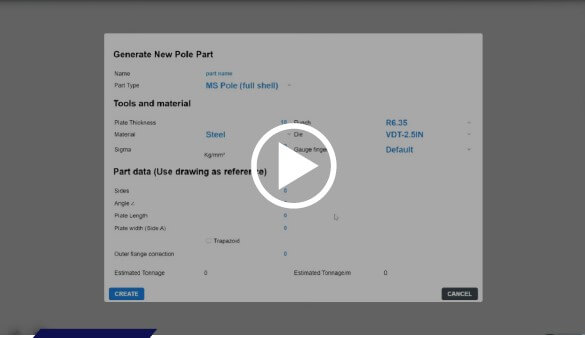
To match the radius and geometry of the various poles being produced, an Optima tandem press brake setup can be customized for the required open height, stroke and throat depth of each job. Using Ursviken’s pole-generating software, which the company developed specifically for this application, the overall process is fairly straightforward.
“An engineer produces the file with offline programming and enters in the dimensions of the pole they need,” O’Neill explains. “Those dimensions include the length, width and thickness of the material and the number of angles required. Because many poles are what we call multi-sided, the number of sides depends on the customer and the pole being produced. Customers just enter those dimensions, and that’s literally it. The entire process is completely automated, so it only takes one person. It’s literally plug and play.”
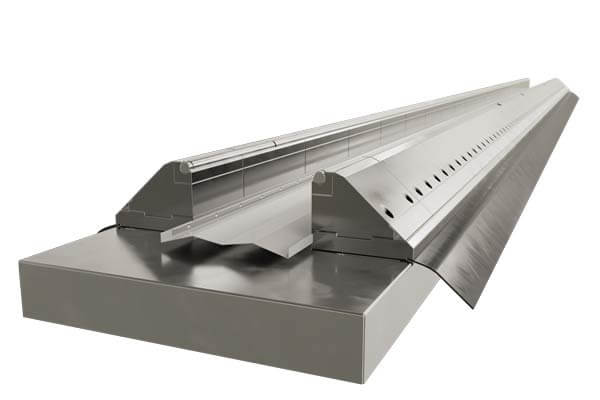
For the actual bending process, the tooling to produce multi-sided poles is incredibly specialized and was developed with extreme bending in mind. The company’s variable die tool (VDT) can support up to 1,000 tons per meter while also allowing the die opening to adjust automatically as the taper changes.
“We invented the VDT in 1992,” O’Neill says. “It’s a bottom tool that automatically opens in segments, depending on what you need to bend and at what radius, angle and thickness. The VDT is a game changer in terms of cycle times and efficiency.
“It also has the unique ability to support the shoulders of the metal as it’s being crimped into shape,” he adds, “which is incredibly important as the crimp seam has to be as tight as possible to be welded. It can’t have a gap, and that must be the case all the way across the material.”
In terms of consistency across the full length of the pole, Ursviken’s FlexiCrown CNC crowning system is also essential. Unique to Ursviken, the FlexiCrown system is a segmented crowning solution developed to correct beam deflection and compensate for variations in the material. Each segment of the system is independently adjustable and spaced at about every 600 mm to allow fine control of the bending profile. Overall, it helps customers reduce errors, waste and setup time.
“When bending on a press brake, there’s always going to be unevenness along the sheet,” O’Neill says. “The FlexiCrown system, however, is positioned under the material and compensates for any kind of wave movements by deflecting the pressure. It’s something unique to Ursviken. Other manufacturers have something called CNC crowning where they use a wedge-based system to adjust unevenness.”
The system works thanks to a series of sensors that are employed during the first bends of a new job. Using segmented wedges that can be independently adjusted, corrections are stored within the system to be automatically pulled up for recurring products. Because these corrections are easy to retrieve within the software, setup is faster, errors are reduced and, in many cases, the massive effort to remove scrap is eliminated.
“If there’s an issue, that’s a big piece of scrap metal to get rid of,” O’Neill says. “You need overhead cranes and big trucks to haul that out. It’s a huge deal.”
An easy lift
Clearly, Ursviken has dedicated a significant amount of time developing specialized tools that make the process of producing steel poles as automated as possible. In terms of traditional material handling solutions, the bending sequence itself is also highly automated.
In an optimized horizontal setup, stacks of flat plate are positioned alongside the press brake. A hydraulic gripper pulls each plate into position while front and back alignment pushers stabilize and precisely locate the long, tapered workpiece. Once the bending process is complete, the same gripper system removes the formed pole section and transfers it to downstream operations, typically for seam welding.
Depending on the size and scope of a bending project, Ursviken also offers carousels to automatically change out the tooling for each job. Press brakes can also be outfitted with a robotic arm for lights-out-style processing. No matter the setup, before a press brake system is ever installed at a customer location, Ursviken has the capabilities – and the facility size – necessary to fully test the equipment first.
“No other manufacturer has the ability to fully test this type of equipment before shipping it to the customer, but that’s standard for us,” O’Neill says. “We have the ability to set it up in Sweden, form poles to customer specs and then invite them on-site to inspect the entire system before we ever ship it. We call that a factory acceptance test. For many of our competitors, the first time a system is ever assembled is at the customer’s site, and that’s a disaster waiting to happen.”
It is this attention to detail that will be critical as utilities ramp up their efforts to modernize the United States’s aging electrical infrastructure in the years to come. For fabricators, this ramp-up represents a rare opportunity to enter a high-volume, long-term market – as long as they have the right technology to meet the scale and precision required. By combining purpose-built tandem press brakes, proprietary tooling, advanced crowning systems and automated material handling, Ursviken has positioned itself as a key enabler for the next generation of steel utility pole manufacturers.


