In the dynamic world of metal fabrication, the ability to respond to customer demand with speed and accuracy is crucial. AMI Attachments Inc., a North American manufacturer of heavy equipment attachments, faced this challenge by adopting offline programming (OLP) and integrating six robots of different brands into its production process. AMI discovered many benefits to this approach.
Founded in 2001, AMI Attachments has grown from a modest 15,000-sq.-ft. shop to a 100,000-sq.-ft. manufacturing facility. Known for reliable attachments for excavators, backhoes and wheel loaders, AMI serves a diverse customer base across Canada and the United States. However, as market demands evolved and the industry faced a skilled welder shortage, AMI needed to find a solution to maintain its standards and meet production goals.
Addressing the challenges, AMI introduced its first welding robot, a Panasonic cell, to its MIG welding process. Initially, the robot programming was done manually, which was time consuming and prone to errors, especially in a high-mix, low-volume production environment. The manual programming method required the robot cell to be taken offline frequently, resulting in production downtime and inconsistent weld quality.
Recognizing the need for a more efficient solution, AMI turned to Visual Components OLP software. This decision marked a significant shift in the production process, allowing AMI to streamline robot programming and enhance overall efficiency. PJ Muker, robotics supervisor and lead programmer at AMI, knows the importance of flexibility and adaptability in the fabrication process. He credits the ability to quickly switch between different parts and adapt to varying customer demands as being crucial for AMI’s success.
Implementing improvements
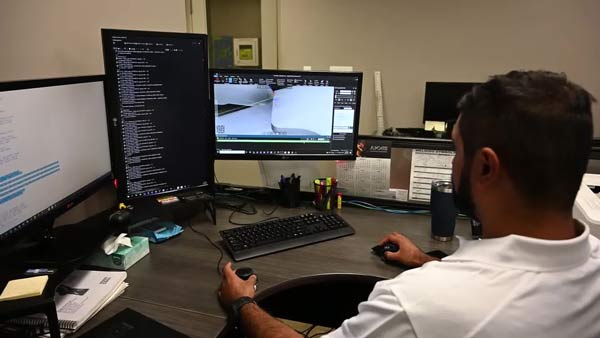
The implementation of OLP was a notable improvement. The OLP software enabled AMI to create and test robot programs offline without interrupting production. This not only reduced programming time by 70 percent but also improved the accuracy and consistency of the welds. Muker and his team found the software to be user friendly and efficient. The software’s realistic graphics and intuitive interface make it easier for the team to create accurate and reliable robot programs.
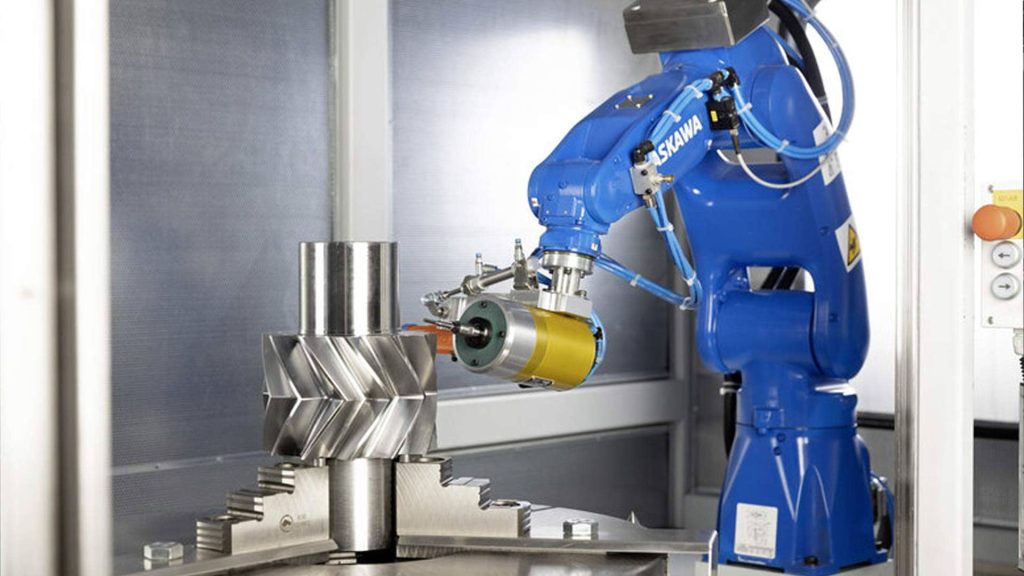
Following the successful integration of the OLP software, AMI expanded its capabilities by commissioning five additional Yaskawa welding robots. Use of the software’s 18 robot post-processors allows AMI to easily translate programs into different native languages and download them to the robots for real-time execution. This flexibility was crucial in maintaining production efficiency and meeting customer demands.
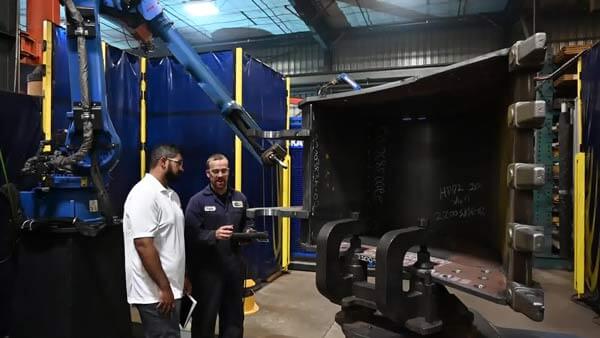
The process included remote and on-site calibrations to minimize downtime and ensure the accuracy of the robotic setups. The tailored training programs provided by Visual Components and its North American partner, Mach Machines, ensured that AMI’s robot programmers could maximize the potential of the OLP software.
The journey to implementing OLP and commissioning multiple robots was not without its challenges. AMI had to navigate the complexities of transitioning from traditional programming methods to a more advanced, automated approach. However, the support from Visual Components and Mach Machines, along with the dedication of AMI’s team, ensured a smooth transition and successful implementation.
One of the key factors in this success was the attention to detail during the calibration process. Ensuring the accuracy of the calibration points and conducting thorough accuracy testing were crucial steps in achieving reliable and consistent robotic setups. The expertise of Mach Machines, having completed more than 100 software calibration installs, was instrumental in quickly and correctly addressing any issues that arose.
Welding efficiency
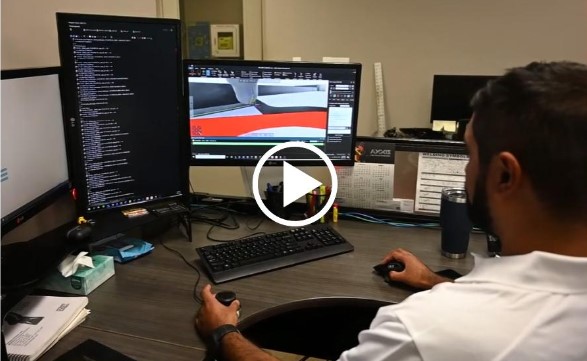
AMI’s OLP workflow with the OLP software is streamlined and user friendly. The process begins with CAD file preparation, where the robot programmer retrieves the job number and its corresponding CAD file, then constrains the part in Autodesk Inventor software using calibrated robot fixtures. The programmer exports the CAD model as a STEP file and imports it into the software.
During the programming phase, the part is attached to the robot positioner and the programmer includes comments and sets alarms and timers to notify robot operators about part specifications or any pertinent information, such as pre-heating requirements. This collaborative approach ensures that all relevant details are communicated effectively, reducing the likelihood of errors and enhancing overall efficiency.
Since adopting Visual Components OLP software, AMI has significantly improved its welding process. The ability to save and reuse robot programs with the weld template has reduced programming time for similar parts and enabled swift adaptations for multiple parts. This has been particularly beneficial for high-mix, low-volume production environments, where the ability to quickly switch between different parts is essential.
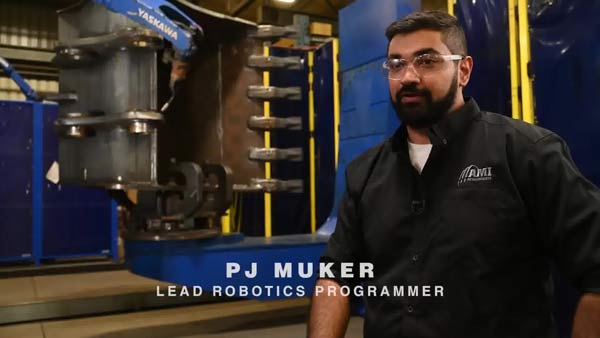
Muker notes that one of the key benefits of using the software is the reduction in programming time, which has allowed AMI to respond more swiftly to customer orders. The software’s ability to simulate and validate programs offline has minimized production downtime and improved overall efficiency.
The adoption of the software has not only enhanced efficiency but also significantly improved welding quality. By enabling precise control over the welding process, the software has helped AMI reduce defects and achieve consistent, high-quality welds. This has been particularly important for complex parts that require intricate welding patterns, such as stitch welds.
For instance, programming times for smaller parts have been reduced from a full day to just 4 to 7 hours, while for larger parts, the time has been cut from over two days to a maximum of 14 hours. The ability to quickly and accurately program complex welds has been a significant advantage for AMI, allowing the company to meet customer demands more effectively.
Valuable journey
AMI Attachments’ journey with OLP and robotic integration serves as a valuable case study for other fabricating shops looking to enhance production efficiency and quality. By adopting innovative solutions and leveraging the capabilities of Visual Components OLP software, AMI has positioned itself to meet evolving market demands and maintain high standards of production.
As the metal fabrication industry continues to evolve, the ability to respond to customer demand with speed and accuracy will remain a critical factor for success. AMI’s experience demonstrates the importance of adopting advanced technologies and fostering a culture of continuous improvement to stay competitive in this dynamic landscape.