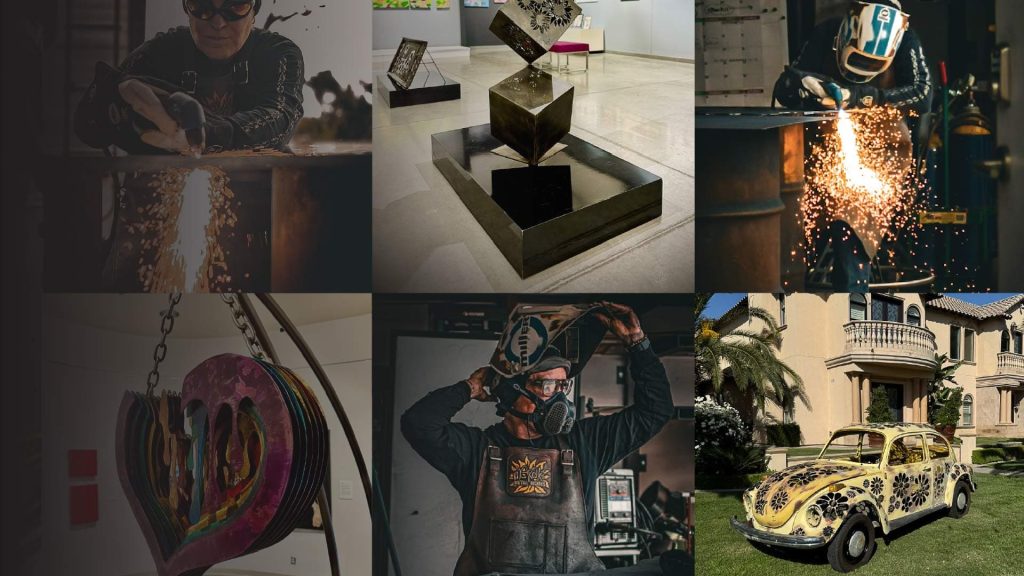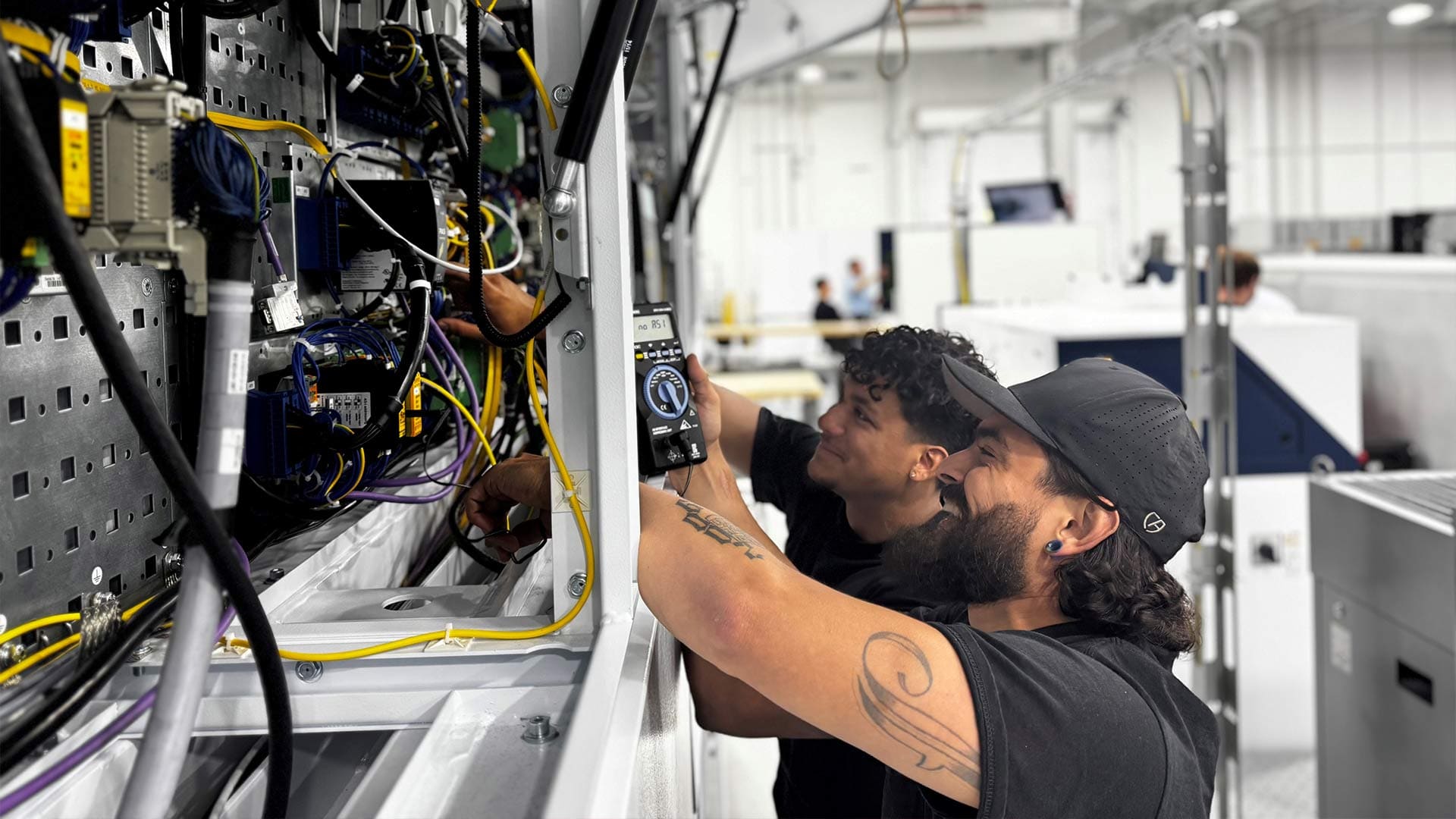
To develop the next generation of manufacturers, the first step is showing them what the industry is actually like today. Once the stereotypes have been dispelled, the next step is highlighting the incredibly broad range of career paths that are available. This, too, requires some stereotypes to be set aside.
When most folks think about jobs in the manufacturing industry, they often picture someone working on a production floor, cutting or welding metal, but that’s just part of the picture. The industry also needs marketing and finance professionals, engineers, software developers, product designers, salespeople and more. Jessica Chavez, a training manager at TRUMPF Inc., knows this first-hand, and she’s on a mission to tell the world that manufacturing has something for everyone.
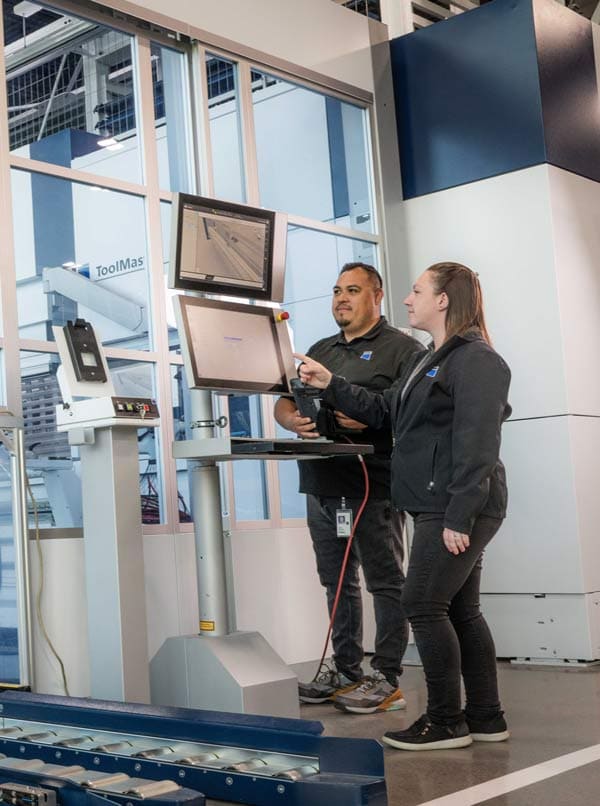
“People think a job in manufacturing means standing in front of a machine all day,” she laments. “And while there are production environments where operating a standalone machine is still an important part of the job, manufacturing today is even broader than that. As technology, automation and digitalization continue to advance, we’re seeing more opportunities in areas like automation, robotics, software, applications, service and other highly technical roles.
“The challenge for the younger generation is understanding that these career paths exist and how they match with the skills they have,” she adds. “If you like talking to new people, you might enjoy a role in sales. If you like to problem-solve, we could use you in our customer support department. There are lots of opportunities.”
There’s another set of skills, however, that Chavez wants to broadcast – a set of core capabilities that TRUMPF has now embedded into all of the company’s apprenticeship and training programs. These skills include communication and teamwork, problem-solving and troubleshooting, adaptability and a willingness to learn, technical and digital skills, and ownership and initiative. To succeed in a career in manufacturing – or any industry, for that matter – these five fundamental skills are essential.
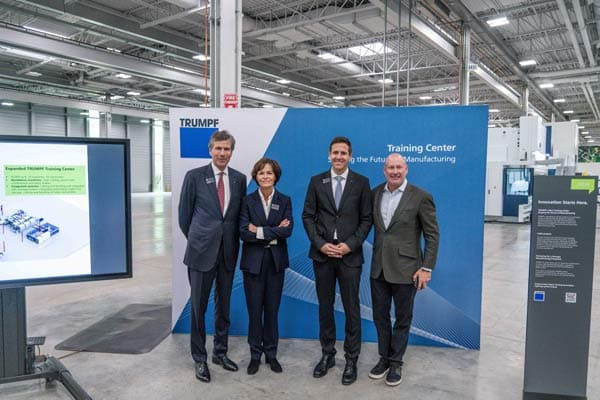
“Minus the technical and digital skills that are so important as manufacturing continually heads in that direction, we consider these soft skills or universal skills,” Chavez says. “If a person can take ownership and initiative, that doesn’t just help them in a professional environment, it also makes them a good person in general. Anyone that exhibits these skills will be successful no matter what they want to do or where they are in their lives.”
Professional development
Referring to these core capabilities as soft skills may undermine the massive importance they hold when it comes to career success or even life success. Chavez says that many of the individuals that don’t complete an apprenticeship or training program are often lacking one or more of these fundamental skills.
Jinnette Perez-Orr, head of field service engineer training and the apprentice program at TRUMPF, says that when you break down each of the core skills and relate them specifically to a career in manufacturing, it makes sense why they’re so closely tied to individual success – or failure. “Manufacturing is highly collaborative, and technical knowledge has to be communicated effectively for the job to be done well,” she says regarding communication and teamwork, one of the five essential skill areas TRUMPF has identified. The full list includes:
- Communication and teamwork: Effectively sharing technical knowledge across highly collaborative teams is essential in manufacturing, but communication and teamwork are essential in virtually every setting. These skills allow individuals with diverse strengths to align their efforts, solve complex problems and achieve shared goals far beyond what anyone could accomplish alone.
- Problem-solving: Navigating equipment failures and troubleshooting unexpected operational challenges are critical on a shop floor when time is money, but being able to think through problems instead of just following instructions is critical in all areas of life.
- Adaptability: Anyone new to the manufacturing industry will learn that technology advances quickly, which means learning can’t stop after school or initial training. Anyone that can embrace the idea that technologies, software and customer expectations will inevitably evolve can expect a successful long-term career.
- Ownership and initiative: Demonstrating accountability, independently seeking answers and learning from mistakes are all calling cards of successful individuals. And when those skills are applied to a shop floor – being willing to take responsibility, find answers and move things forward – the entire team benefits.
- Technical and digital skills: Today’s manufacturing environment is increasingly connected, automated and software-driven, which means that individuals that can navigate CAD/CAM software, schematics, mathematics and automation tools will excel in the industry.
“When we talk about the next generation of manufacturers, we’re not only talking about people who know how to operate equipment,” Perez-Orr says. “We’re talking about people who are curious, technically minded, dependable, comfortable working with others and willing to keep learning as the technology changes.”
Foundational training
To help instill these soft skills in the next generation of manufacturers, TRUMPF has made a concerted effort to thread them into nearly every aspect of the company. Chavez says that it’s easy to forget about them on the shop floor, and that’s exactly why they’ve been officially integrated into all types and levels of company training. In doing so, these soft skills will create a solid foundation from which individual careers can grow.
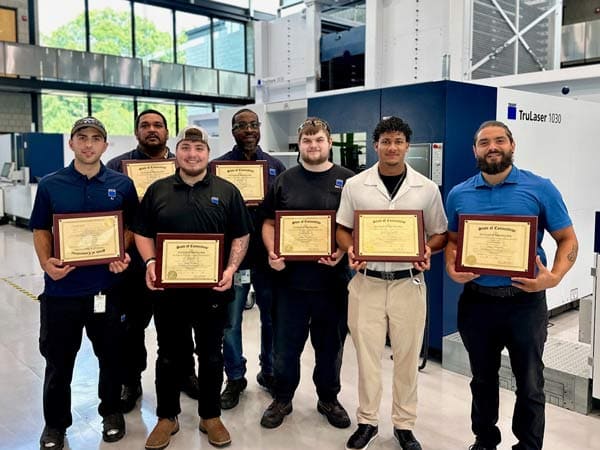
“With a shared foundation of safety, quality, communication, problem-solving, reliability and teamwork, training can evolve to specific technical preparation to adapt to individuals’ specific career pathways,” Perez-Orr says. “That foundational structure allows the technical content for the training to evolve as the machines, software, automation and customer needs change. The goal isn’t to train someone on one piece of equipment, but to develop someone who can continue learning throughout their career.”
Taking this philosophy to heart, TRUMPF’s training and apprenticeship programs are centered on four critical components:
- Classroom instruction: Dedicated technical coursework at TRUMPF’s internal training center.
- Department stays: Hands-on exposure through rotations in production, applications, customer support and other company departments.
- Higher education partnerships: Established partnerships with a variety of universities and community colleges allow trainees and apprentices to earn upfront-funded college credits.
- Soft skills integration: Interactive kickoff workshops feature mock scenarios to apply newly learned skills, which are reinforced during department stays, peer and mentor interactions, and throughout a career at TRUMPF. By introducing the soft skills first during the kickoff workshop, trainees and apprentices understand the benefits of developing these behaviors early on.
“The main reason we integrate the soft skills into both the apprenticeship and training programs is because they are important throughout an entire career. Even experienced professionals can benefit from continuing to strengthen skills like communication, collaboration, adaptability and leadership as their roles and responsibilities evolve,” Chavez explains. “By integrating soft skills at the apprenticeship level, the hope is that these individuals will stay with the company and become ambassadors of the learning they’ve gained through the apprenticeship program. These soft skills often need to be learned from behavior. Sometimes, it doesn’t click until you see someone else do it.”
Power of partnerships
When TRUMPF added soft skills education to its curriculum two years ago, it was one of the biggest upgrades the company’s training programs have received. It wasn’t the first time, however, for the curriculum to get a makeover.
“We’re continually evaluating and adapting the apprenticeship program to meet the changing environment and evolving technologies,” Chavez says. “TRUMPF is constantly changing, and we could never teach our apprentices using the same curriculum we did even five years ago. The changing curriculum isn’t just based on TRUMPF technology, however. It’s based on what’s happening in the real world in manufacturing, as well.”
To keep its finger on the pulse on the ever-changing world of manufacturing and also stay on top of educational trends, TRUMPF works with a large group of nonprofits and educational partners at the university, community college and high school levels. Exhibiting the utmost in collaboration, partner organizations are willing to adjust their programs based on the curriculum changes that TRUMPF recommends and vice versa. This collaborative approach also means that TRUMPF partners have infused the five core skills into their curriculums, as well.
“At our core, TRUMPF is in the machine tool industry where we sell machines and help our customers grow, but we’re also a big supporter of the community,” Chavez says. “To do that, we need to be able to grow the workforce and bring up the skills of everybody that lives in this area. The talent pool, however, isn’t just for TRUMPF, it’s for everybody in our community.”
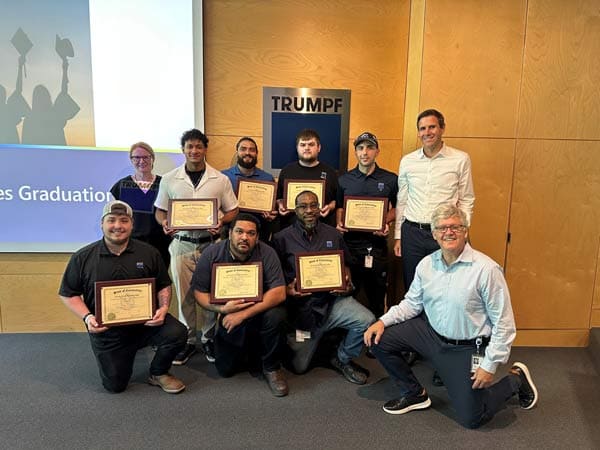
Proof of that statement is TRUMPF’s membership in iTEC, the Institute of Technology and Education Consortium of Connecticut. iTEC is made up of organizations and private companies like TRUMPF that all have similar needs and goals.
“The consortium is just getting started with TRUMPF helping to build the foundation in partnership with the German American Chamber of Commerce [GACC],” Chavez explains. “Our goal is to bring together organizations of all sizes that are facing similar workforce challenges. By working together, we can create stronger and more consistent career pathways, expand apprenticeship opportunities and make it easier for our education partners to develop programs that support the broader needs of the industry and not just the needs of one company.”
TRUMPF also works with the GACC and ConnStep, a manufacturing extension program that helps spread the word about available apprenticeships. Truly, the company believes in the power of partnerships.
Preparation for the future
Compared to what a career in manufacturing looked like 50 years ago, the next generation of manufacturers has a lot to look forward to. Perez-Orr says the industry of today, however, still offers the satisfaction of being part of a trade.
“Manufacturing still offers hands-on work and the satisfaction of creating something real,” she says. “The nature of that work, however, has changed significantly. A modern manufacturing career could involve robotics, laser technology, automation, software, sensors, data analysis, sustainability and highly precise digital systems. That doesn’t mean practical skills are no longer important; it just means the physical and digital sides of manufacturing now work together.
“Someone might diagnose a machine, interpret data, adjust a process, collaborate with a customer and then see the result produced in the real world,” she adds. “For young people who enjoy technology but also want to build, fix, improve and solve practical problems, manufacturing offers a very exciting combination. It’s one of the fields where the future becomes tangible.”
Chavez adds that when young people combine their interests with TRUMPF’s five soft skills, the sky is the limit.
“The important message for the next generation is that they don’t have to arrive knowing everything,” she says. “Curiosity, preparation, persistence and a willingness to grow are all it takes to open the door to a career in manufacturing. From there, no matter the job title or career path, you aren’t going to be successful unless those universal skills are applied at every turn. But when you do, you can do anything.”
Training is top of mind for all manufacturers. To learning about the recruitment and retention strategies that are working, check out our training articles archive.