
Ask anyone who specifies materials for the oil and gas industry about what keeps them up at night, and you’ll hear nothing out of the ordinary. It’s the practical concerns: Will it survive the service environment? Will it meet the code? Can my shop form and weld it without surprises? What will it cost and will that price hold until the job ships?
The industry asks these questions in an unusual climate. Operators have learned to be disciplined about capital, and fabricators work to tight margins on quoted prices. The cost of failure in downtime, safety and reputation far outweighs the cost of the material. That pushes buyers toward the familiar and the proven, so specifications tend to stay as they were written years ago.
But the pressures on stainless steel have changed. Nickel and molybdenum prices swing enough to unsettle a quote between order and delivery. LNG and hydrogen add new demands for strength at low temperature alongside traditional processing and storage duties. Buyers aren’t looking for novelty. They want the same confidence they have in 316L, with fewer cost surprises and more engineering margin.
That’s why Outokumpu is putting a spotlight on Supra 316plus (EN 1.4420, UNS S31655). It’s a practical option where 316L is already specified and, in some cases, where duplex grades are a poor fit. Below, I cover where 316plus fits, what the data shows and where its limits are.
The best chemistry
The key to 316plus is its chemistry. Its key feature is reduced levels of molybdenum and nickel. While this might be expected to impact its corrosion resistance, it’s better than standard 316L due to the increased chromium and nitrogen content. Chromium provides the basic corrosion resistance and nitrogen significantly increases mechanical strength and resistance to localized corrosion.
The commercial benefit follows from the same chemistry. It contains a lower level of expensive alloying elements, such as nickel and molybdenum, that historically are also volatile in price. In practice, that means a lower purchase price and less exposure to alloy surcharge swings. While the emphasis is often on lifecycle cost benefits, a modest initial cost and price stability are clear benefits of 316plus.
For a grade replacing 316L, the first question is whether corrosion performance stacks up. In pitting and crevice resistance, 316plus does. Due to its high chromium and nitrogen content, the pitting and crevice corrosion resistance of 316plus is on the same level as, or even better than, the austenitic chromium-nickel-molybdenum standard grades, despite its lower molybdenum content.
In laboratory testing, it has a pitting resistance equivalent of 26, compared with 24 for 316L. The measured critical pitting temperature in chloride solution is about 10 degrees higher than for standard 316L. In uniform corrosion, it behaves very similarly to 1.4404 and 1.4432 in most environments.
The limits matter just as much to engineers:
- Chloride stress corrosion cracking (SCC): As with other standard austenitic stainless steels, 316plus is prone to chloride-induced SCC at temperatures above about 122-degrees F, depending on the applied stress and chloride concentration. Where hot, chloride-bearing, stressed service is expected, duplex 2205 or a higher alloy grade remains the right choice.
- Strong acids and hot caustic: 316plus may suffer from uniform corrosion in strong mineral acids and hot strong alkaline solutions.
That means that 316plus doesn’t necessarily take on duties that 316L can’t. Instead, it offers a leaner, stronger alternative within the same family of service conditions.
The real differentiators
Strength is where 316plus differs most clearly from 316L. The minimum yield strength is roughly 350 MPa for the standard cold-rolled product, against 240 MPa for 316L. The higher strength holds from low to high temperatures, makes thinner gauges possible and enables lighter structures.
For tanks and pressure vessels, which must meet defined burst-strength and yield requirements, it can mean thinner material for the same duty. In an illustrative case study of a large storage tank shell, the 316plus design came out to be about 20 percent lighter than the 316L equivalent. Savings depend on the design, service and pricing, and each job needs its own thickness and pressure calculations. Outokumpu’s online storage tank calculator, which now includes 316plus, is a sensible place to start.
Today, oil and gas operators work across a wider temperature window. At the cold end, 316plus performs significantly better than 316L at all tested temperatures in terms of its ability to absorb energy, which suits arctic, LNG, hydrogen and other cryogenic applications.
At the hot end, it can be applied across the same range of temperatures as 316L, from -320- to 1,000-degree F, and at high temperatures it offers superior performance. Designers who might specify titanium-stabilized 316Ti may not need the extra cost because from 70- to 1,000-degree F, 316plus outperforms 316Ti in terms of yield strength.
Hydrogen deserves a mention because it increasingly sits next to traditional oil and gas assets. In third-party testing under high-pressure hydrogen, 316plus showed far less embrittlement than 316L. The stable austenitic microstructure reduces this risk.
A grade only earns its place if fabricators can work with it. The formability of 316plus is comparable to 316L, with matching drawing and stretch-forming results in testing. Because the steel is stronger, forming loads and springback should be checked on first runs.
Conventional welding methods are applicable and austenitic 316L filler metals (19 12 3 L)1 can be used to get matching corrosion resistance, with duplex consumables (22 09 NL)2 used to get higher strength. In testing, there was no significant difference in pitting resistance between 316L and duplex 2205 filler metals. Two practical points stand out:
- Shielding gas: A significant drop in critical pitting temperature occurs when only argon is used for shielding and backing gas, likely because nitrogen is lost from the weld pool. Shielding gases should be argon/helium-based or contain up to 3 percent nitrogen.
- Post-weld work: Welds aren’t sensitized when typical welding procedures are followed and post-weld heat treatment generally isn’t required. To fully restore corrosion resistance, weld discoloration should be removed by pickling and passivation.
Acceptance and availability
Acceptance often decides whether a grade gets used. 316plus is covered by the ASTM pipe and tube specifications, including A312, A358, A269 and A554, and by NACE MR0103/ISO 17945 and MR0175/ISO 15156. It’s also accepted for pressure vessels through ASTM A240 and ASME BPVC Section VIII, Division 1 under Code Case 2903-1. One caveat applies to storage tanks: API 650 and API 620 are listed as in progress, so applicability should be verified before specifying on any job that requires them.
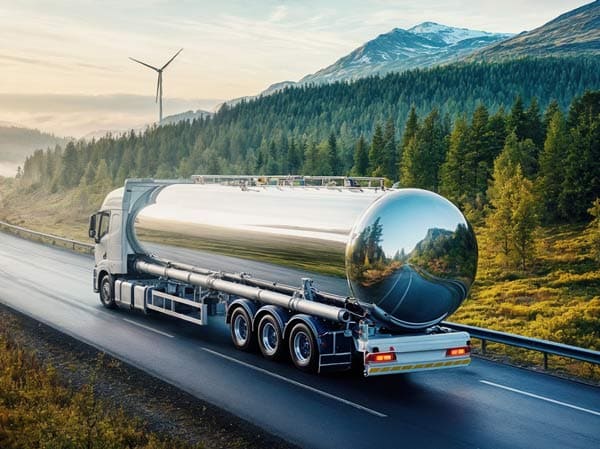
Across upstream, midstream and downstream operations, I see the strongest opportunities in:
- Process and storage tanks and pressure vessels, where strength-driven thickness reductions matter
- Pipe and tube, where the ASTM product standards are already in place
- Heat exchangers and process equipment in moderately to highly corrosive service that aren’t prone to chloride SCC
- LNG and hydrogen infrastructure, where low-temperature strength and toughness are the draw
- Water-handling infrastructure around operations, such as water treatment and transport
Outokumpu’s guidance to distributors and fabricators is to start where stainless steel is already specified. The clearest opportunity is existing 316L applications, where 316plus is effectively a drop-in replacement. We aren’t suggesting it replaces duplex 2205 where duplex is the right grade or that it makes the case for converting from carbon steel.
For a first project, I’d suggest four steps:
- Pick an existing 316L application with a thickness or price-volatility pain point.
- Run a thickness check, using the tank calculator for storage vessels.
- Confirm the environment sits outside the chloride SCC range and that the code or customer specification accepts S31655.
- Qualify welding procedures with nitrogen-bearing shielding gas and the appropriate filler.
Outokumpu experts can support each step, from identifying a clear business case to sampling, testing and prototyping, through to volume manufacturing.
Oil and gas doesn’t reward bold claims. It rewards materials that behave as expected, year after year, under conditions that leave little room for error. Any new grade has to prove itself against familiar ones, and it should be judged on documented strengths and stated limits rather than enthusiasm.
By that standard, 316plus makes a strong case. It gives buyers something close to the 316L they already trust, with more strength, equal or better pitting resistance, and a price less tied to nickel and molybdenum. For an industry that has to build for the long term while managing costs day to day, that may be the most useful kind of progress.
- As per EN ISO-14343-A: 19 percent chromium, 12 percent nickel, 3 percent molybdenum, low carbon (C ≤ 0.03 percent)
- As per AWS A5.9: 19 percent chromium, 9 percent nickel, nitrogen, low carbon
Check in with our oil & gas archive to stay on top of the latest developments that impact the industry.


