The Waldinger Corp., a Des Moines, Iowa-based full-service mechanical, electrical, sheet metal and service contractor, needed a solution for labor bottlenecks in pipe welding. In 2022, the company partnered with Novarc Technologies Inc., transforming a production hurdle into an opportunity to continue its tradition of innovation leadership.
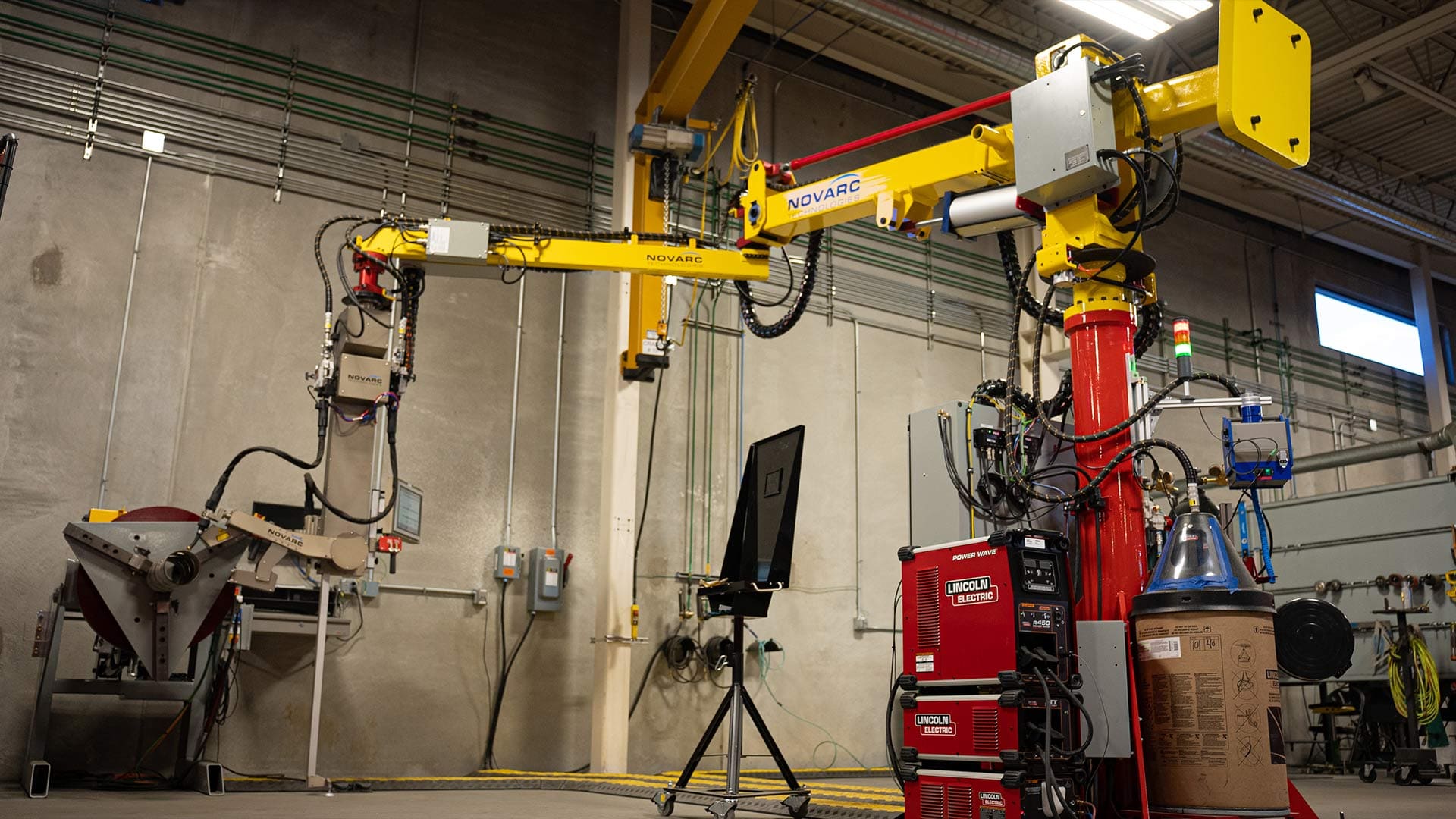
Waldinger, known for its rigorous quality standards and innovation leadership, made a strategic decision to integrate Novarc’s spool welding robot (SWR) into one of its Midwest production facilities. The move enabled its certified wire welders to deliver on the pipeline of increasingly large-diameter, high-specification projects, and it continues to achieve measurable gains in productivity, quality and operational planning.
Project demands
“The lack of certified wire welders was really the driver for us,” says Curt Baker, director of mechanical fabrication at Waldinger. “In our market, we just couldn’t find the people we needed to meet the scale of work we were taking on, especially when we had multiple large projects coming in.”
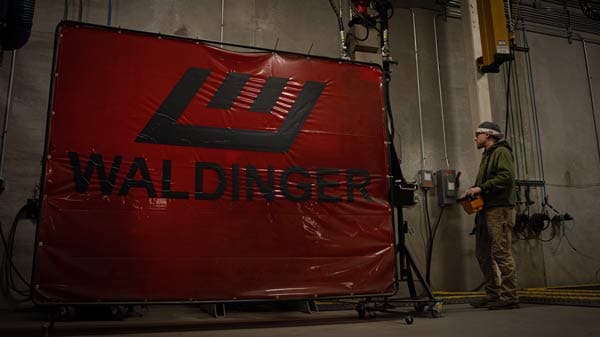
Prior to implementing the SWR, Waldinger’s best-performing welders were producing up to 100 factored diameter inches (FDI) per day, depending on pipe size and complexity. But many welders, particularly those less familiar with MIG welding, struggled to consistently meet that mark, which left the company vulnerable to bottlenecks during demanding production.
After a rigorous evaluation, which included several potential solutions, the best choice became clear: the Novarc SWR. The compact shop footprint, positioner configuration flexibility and integration with Stratus, a cloud-based workflow and project management platform, set the cobotic welder apart as the best-in-class solution.
The SWR was deployed alongside the existing pipe cutting system, with full compatibility through Stratus, which streamlined the flow from cutting to welding.
Today, the SWR is operated by a team of four certified wire welders, with a fifth in training. Each welder is fully qualified and trained to understand the weld process and machine interface, allowing for proactive monitoring and collaboration with Novarc’s support team when needed.
Productivity, predictability
Waldinger’s productivity gains followed a clear progression as the SWR system has evolved:
- With two-positioner integration, the team achieved up to 250 FDI a day.
- After upgrading to a three-positioner setup and enabling the NovEye Autonomy feature (fully autonomous pipe welding), they were able to achieve up to 345 FDI a day, equivalent to the combined output of three to four skilled welders.
- On peak production days, the team logs up to nearly seven hours of arc-on time per shift, ensuring maximum machine utilization.
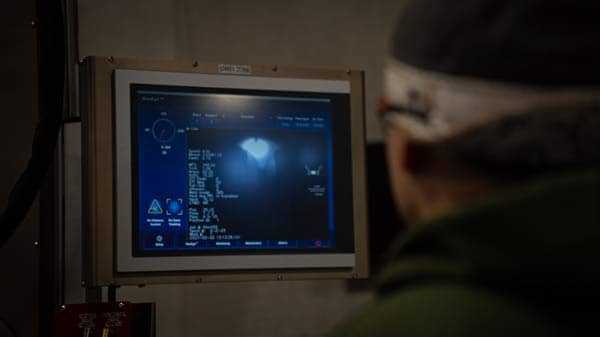
“The SWR has the weld output of three to four certified wire welders,” Baker says, “and that has helped us scale without always needing to hire more people.”
The team continues to leverage NovEye’s autonomous capability, allowing operators to step away during certain parts of the weld cycle to prep or clean upcoming joints, keeping productivity high and downtime low.
In addition to productivity, the SWR has contributed to higher process transparency and quality assurance. Though Waldinger typically X-rays only 5 to 10 percent of its welds, the X-ray-quality consistency of the SWR gives the internal team and customers added confidence.
In one rare instance of a field weld issue, the NovEye system allowed the team to quickly retrieve video footage of the weld sequence, verifying the problem and resolving it without ambiguity.
Scott Miller, production engineer at Waldinger, says the system allowed them to go back, review exactly what happened and address it immediately.
“Having the video record of each weld is a game changer,” he says.
Miller adds that training was fast and effective and that Novarc’s hands-on instruction gave welders the confidence they needed early on. Furthermore, the support team remained available to reinforce key learning moments.
“Support was there when they had follow-up questions,” he says.
Positive planning
The integration of the SWR into Waldinger’s Stratus-driven workflow has been a core advantage, enabling full coordination from spool design to weld completion. The technology has increased the potential for proactive planning around which spools are best-suited for robotic welding so the team can optimize production layouts and minimize idle time.
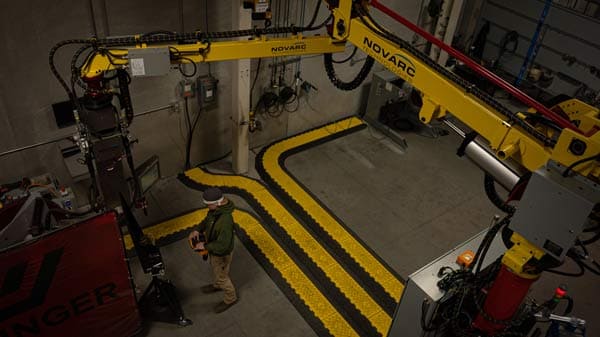
“It really made us rethink how we plan spool fabrication,” Baker says, “and that’s improved our efficiency upstream.”
Much of Waldinger’s current work is focused on data center projects where pipe sizes typically range from 8 in. to 20 in., primarily in carbon steel. While they use stainless steel less frequently today, the SWR has already been successfully tested on stainless welds and is ready to adapt when those jobs scale.
More than a productivity tool, the SWR has become a strategic asset, driving smarter planning, higher output and more consistent quality across jobs. Waldinger continues to evaluate workload growth and is considering further system expansion in the near future.
“It’s helped us think differently about shop layout, spool planning and fabrication flow,” Baker says. “It’s a mindset shift – and a positive one.”
As automated welding technology continues to evolve, stay in the know by visiting our archives.