

I submitted my first article to Stamping Productivity’s flagship magazine, FAB Shop Magazine Direct, in 2012. Its title? “Check Your Fly.” The editor at the time, Russ Olexa, let that risqué headline slide, but gently admonished me about the intro, which explained the mechanics of flywheel stamping presses. “Don’t need this as our readers know all about mech. presses,” he wrote, then returned it for additional editing.
Sadly, Russ left us a few years later, but he was right; I was new to the industry and that introductory paragraph was meant more for my edification than for any seasoned stamping professional. Despite this, I’ve since written more than 100 articles for Techgen Media and its various magazines, and while I still have a great deal to learn, I’ve discovered one immutable fact: stamping houses are painfully slow at adopting new technologies.
A bigger hammer
The contributors to that first article – which was mostly about servo presses, a relative newcomer to the market at the time – included representatives from Stamtec, Komatsu, Seyi-America, Aida and Minster. But there was one expert whom I failed to include: René Zwahlen, president of Sangiacomo Presses Americas. He worked at Bruderer back then, and his exclusion was an unfortunate oversight – with a lifetime spent in the industry, Zwahlen knows a great deal about stamping.
He and I have discussed servo presses at great length in more recent years, resulting in the article “Different Strokes,” which discussed the Industrial Internet of Things (IIoT), interconnectivity and smart sensor technology, followed by “OEE Matters,” where he corrected a few dearly held beliefs on overall equipment effectiveness.
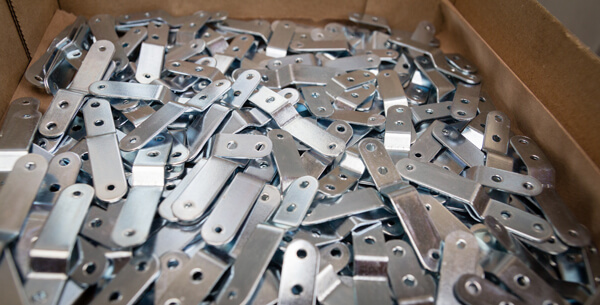
the small wins available to them and call it good.
Zwahlen would’ve agreed with the others interviewed for that long-ago story, which stated: “By replacing the flywheel with servos, builders were able to offer a machine capable of variable stroke length and full working energy at any speed. Suddenly there was a machine that broke all the rules – instead of just swinging a big hammer, servos allow you to slow down mid-stroke, back up and take another hit, or stop indefinitely, giving manufacturers the flexibility to do nearly anything.”
It’s ironic, then, how Zwahlen made much the same statement in the first of the more recent articles, noting, “Too many treat stamping presses like nothing more than big hammers. Therefore, they look for a longer stroke in order to accommodate a larger percentage of whatever work comes their way. We as an industry need to change that attitude.”
No more dinosaurs
Which brings us back to this article’s headline – as Zwahlen (and others) will patiently explain, we as an industry should, indeed, change our attitude; we must embrace newer, more capable and, sometimes, more expensive technology if the domestic stamping industry (not to mention the tool and die making that supports it) is to survive.
Zwahlen’s comments suggest a gradual extinction-level event is forthcoming. Goodbye to the flywheel-driven stamping presses that I once wrote might be “going the way of the dinosaurs;” they are soon to be replaced by the now mature servo-powered and adjustable stroke presses covered so extensively over the past decade. With them will come the newer technologies lumped uncomfortably under the Industry 4.0 umbrella – AI, virtualization and the digital twin robotics and cloud computing – to name a few.
Zwahlen has shared enough technical information on dinosaur-killing servo presses to fill a small book. But he disclosed some insights into why they have failed to gain the market share they so clearly deserve, starting with the tryout room.
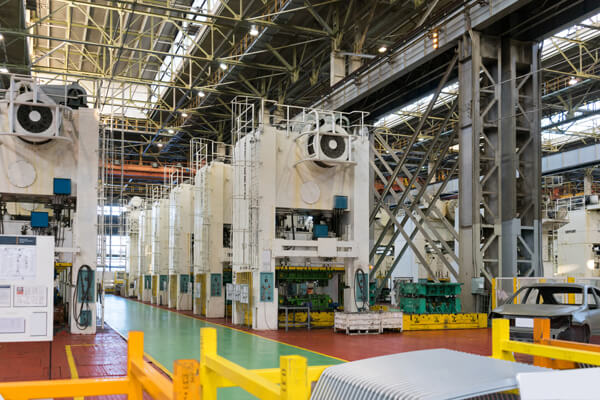
Servo presses are capable of significant magic, he explains, but unfortunately, many shops don’t get a chance to see it. That’s because, even if a company has invested in one, the people that make the tools are – more often than not – testing them on an older, oftentimes antiquated tryout press. And, as Zwahlen points out, how many tool rooms will actually spend the money for a servo press knowing that it will only see occasional use?
“Typically, a customer – whether internal or external – will specify that a die must operate at a certain speed or tonnage,” Zwahlen says. “Yet tool and die makers obviously have a lot of influence over tool design and construction, and rightly so. But in many cases, their years of experience tend to drive customer expectations. For instance, if the tryout press can only run at a certain rate – say 200 strokes per min. – that becomes the standard, even if the production press can operate at higher speeds and make far more than the basic pendulum motions with which so much of the industry is familiar.”
This last part is especially important. Whether it’s a CNC lathe, sinker EDM or programmable bandsaw, machine operators tend to stick with what they know. Those who stand in front of a stamping press all day are no different. They might applaud the variable speed of a servo-powered machine or its easily changed stroke length, yet without plenty of training and managerial encouragement – both of which are sorely lacking in shops where profit margins are tight – they’re unlikely to fully explore the capabilities.
Climbing the mountain
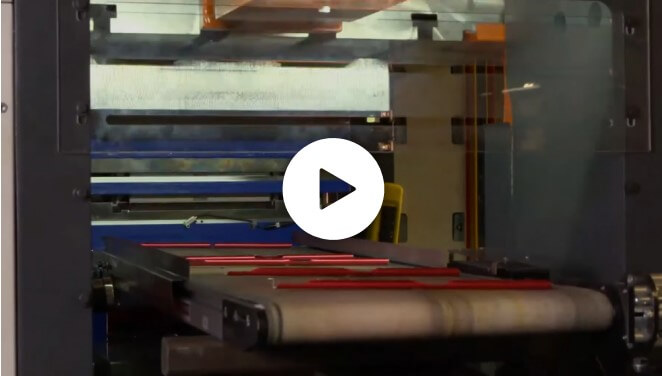
Chief among these is a “fully programmable stroke profile.” Operators can pause the ram momentarily, giving a robot enough time to perform a task. They can go faster in places where they are wasting time. They can use a step profile to hammer parts into shape, then back up and hit them once more for good measure. Shops can use it as a deep-drawing press one day and a not-quite-high-speed stamping press the next. They can do all these things and more, Zwahlen says, yet the sad truth is that most shops that have invested in a servo press continue to use it like they would a mechanical press, albeit one with an adjustable stroke length.
The reason? There are two. The first was already stated: the stamping industry is slow to change, either because management doesn’t see the point in keeping up with current technology or because they don’t have the cash or time to do so.
Second is training. In today’s highly competitive stamping market, shops tend to take the stroke length win and call it good. Yet, investing time in a training class or a few days spent learning about stroke profiles with an application engineer will greatly increase this win potential.
And even in companies that have made the investment, there remains a fundamental disconnect. Zwahlen recounts a webinar he attended not too long ago where two stamping houses talked about their servo press experience. It quickly became clear they went into it without ever understanding the basic principle; in fact, neither had even done an ROI calculation. Both said they needed a fair amount of help and support just using the press, let alone programming it, but were happy with the decision.
Yet they also admitted to running the machines in pendulum mode, just like their old mechanical stamping presses. “Think about that,” Zwahlen says. “We’re now 13 years removed from your original article when servo technology had been around for another 13 prior to that, and this is the industry we’re still facing. Crazy.”


