
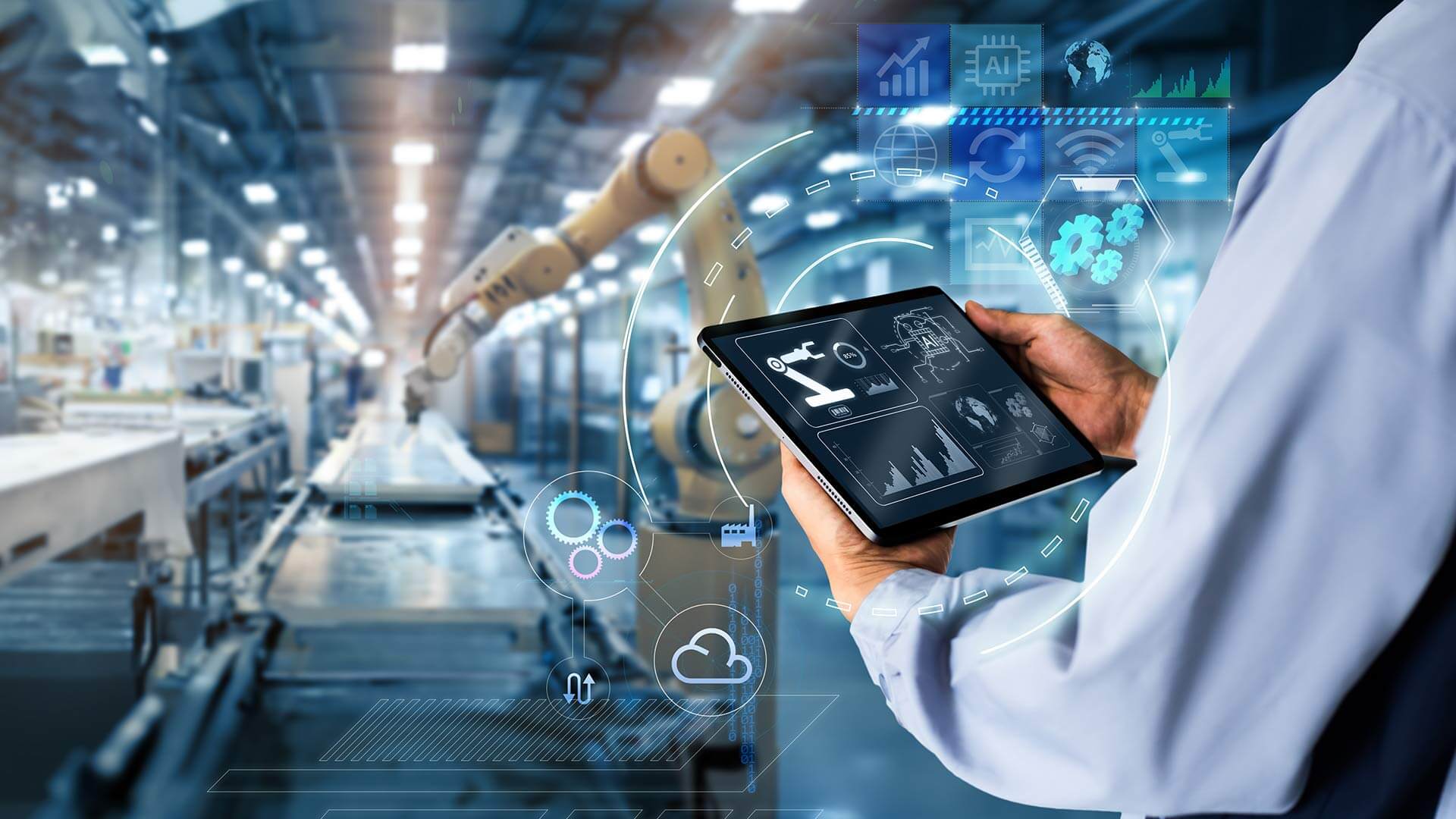
The manufacturing industry is undergoing a transformation driven by rapid technological advancements, changing consumer preferences and evolving regulatory frameworks. Manufacturers everywhere face unprecedented challenges as they seek to remain competitive, profitable and sustainable in the face of unreliable supply chains, uncertain economies and global competition.
When times were more stable, manufacturers focused primarily on their people, processes and business models to sustain success. These key elements remain a foundation for any manufacturing enterprise, yet by themselves they are no longer enough to maintain success over the long term.
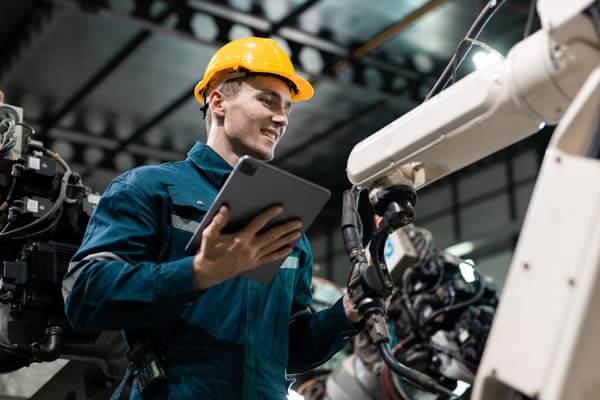
The complexity of the current manufacturing world is forcing companies to respond in ways that go far beyond traditional elements. Here, we examine five areas where manufacturing businesses are making changes today that enable them to generate significant improvements in data management, forecasting and getting to where customers need to go before they do. These changes include broader adoption of automation, more emphasis on business intelligence, protecting company data, implementing sustainability initiatives and “future proofing” their businesses.
1. More automation
Automation in manufacturing has been around for decades. The difference now is that automating machines, software and processes continues to expand into broader and more impactful areas. Increasingly, processes and tasks traditionally performed by people are giving way to high-tech machines and sophisticated digital technologies that enable the production of extremely accurate parts faster and at less cost.
Automation began with ERP software that offered automatic scheduling, purchasing, invoicing, work order and router creation, and other features. This made it possible to reduce labor and material costs, eliminate paper and material waste, improve quality and safety, minimize scrap and rework, and provide customers with faster turnaround times. The next step involved software programs to automate machines, such as nesting programs to optimize the cutting of different parts from the same piece of metal faster and more efficiently. Other examples from Global Shop Solutions include:
- Product Configurator. Reduces the time required to process orders by using predefined options to configure product and sales quotes.
- CAD Interfaces. Eliminates manual data entry by importing the bill of material (BOM) into the ERP software directly from CAD software.
- BOM Compare. Significantly reduces the time and engineering costs involved in creating large BOMs by comparing BOMs in the CAD/CAM and ERP software to identify discrepancies, additions and modifications.
Now, it’s the Internet of Things (IoT) and AI driving automation to a previously unheard-of level. The ability of modern machines, equipment and computers to share real-time data with each other continues to grow – to the point where manufacturing plants run by robots have left the world of science fiction behind and become a reality. Currently, only a fraction of manufacturers have achieved full automation of their plants, but their numbers will grow as the machines and technology become more affordable.
Automation can be costly. Manufacturers shouldn’t implement a certain type of automation just because it’s the latest fad. They need to start by defining the problem the automation will solve. Then, they should create a strategy that aligns automation with business and operational goals and determine how it will benefit the company and customers. Companies should forecast expected ROI but shouldn’t expect overnight results, especially if it’s their first foray into automation.
2. Big data-based decisions
The initial value of ERP consisted of having easy access to data in every area of the business. However, there’s a big difference between data and information that can be used to make decisions and take action. Business intelligence, also known as “big data,” is software that organizes and displays data from many different sources in user-friendly dashboards, reports, graphs and charts. These sources range from current and historical internal data to information gathered through private and public sources, including social media.
Business intelligence provides actionable information, but it doesn’t tell manufacturers what to do. Instead, it presents data in ways that allow decision makers to analyze information, identify trends and gather insights about where their customers are headed and how the company needs to respond. It also provides decision makers with an in-depth understanding of how their company operates, which leads to easier identification of opportunities for improvement where they are needed.

This kind of analysis is now possible because ERP software providers are adding new features and functionalities that allow manufacturers to see big data the way they want to see it, when they need to see it and to use the data at all levels of the company. Some of the ways they are doing this include:
- Tailored ERP. Increasingly, ERP providers are building software kits into their platforms that enable users to create applications for specific manufacturing processes and custom screens.
- Dashboards. Until recently, ERP software only let users import data into a screen if it fit the categories built into the dashboard. Now, many ERP platforms let users create their own dashboards to bring all the data they want from many different sources into one screen.
- Data flow automation. Tailored ERP software also lets users create, schedule and automate reports and workflow that goes beyond the software’s standard applications.
Perhaps the most important factor in business intelligence is the ability to manage data in ways that weren’t previously available. ERP business intelligence doesn’t just display the raw numbers; it provides intelligent information that informs critical decisions to simplify production processes, boost revenues and net profits.
3. Cloud-based cybersecurity
According to an article in Industry Week, manufacturing now ranks as one of the top three industries targeted for ransomware. It’s also prone to intellectual property theft and attacks on supply chains and the IoT. In response, growing numbers of manufacturers are migrating from on-premise to cloud-based ERP.
With cloud-based ERP, the company’s information resides in a data center owned and operated by the ERP vendor or a third-party host such as Amazon Web Services. Cloud ERP provides security features that monitor internal and external activity. When these features detect an unusual event, such as a denial-of-service attack, the system immediately creates an incident response notification. Cloud ERP adds a further layer of protection by encrypting all ERP data and can also monitor internal fraud or asset theft by employees.
The best approach with Cloud ERP is for a company to develop a partnership relationship with the ERP provider. Data is monitored by the provider, who also handles licensing and upgrades for the software. The company’s job as a security partner is to make sure everyone knows who’s responsible for each task. Security experts recommend annual reviews of all current and new tasks.
4. Sustainable manufacturing
Sustainable manufacturing can be one of the most difficult changes for manufacturers to achieve. Yet, according to the Environmental Protection Agency (EPA), sustainable practices are gaining favor within the manufacturing industry, in large part because companies that implement them can reap substantial financial and environmental benefits. Manufacturers that reduce their resource footprints also enhance the company’s brand, build trust within the community and attract new customers that support sustainable practices. Other benefits include increasing growth and global competitiveness by reaching out to international markets that favor sustainability.
Manufacturers embrace this approach for a variety of reasons:
- Lower resource and production costs
- Reduce waste
- Improve operational efficiency
- Respond to regulatory constraints and opportunities
- Enhance employee, community and product safety
- Lower regulatory compliance costs
- Improve sales and brand recognition
- Have more access to financing and capital
- Easier to hire and retain employees
The path to sustainability can be a long and challenging one. To make steady progress, the EPA recommends companies implement sustainability by focusing on the long term in a coordinated, consistent manner. They should prioritize increased competitiveness and revenues over cost cutting and risk reduction. Also, they should integrate sustainability across business functions to avoid having different sustainability silos that don’t work well together. The EPA’s E3 website has more information about sustainable manufacturing.
5. Future proofing business
Change is happening faster and faster in the manufacturing industry, and the impact is often game changing. Manufacturers can no longer afford to get caught by surprise with the “next big thing.” Future proofing – preparing a manufacturing enterprise for what customers will want and what manufacturing will look like in the next few years – requires several technologies.
Automation: Automation provides an essential tool for future proofing a business. When sudden or unexpected change occurs in the market or the industry as a whole, automation provides the speed, flexibility and efficiency to respond quickly. It also improves the ability to forecast trends from customer and industry standpoints and develop a strategy to get there ahead of the competition.
Business intelligence: Manufacturing success often relies on a company seeing where customers are going and getting there before they do. Business intelligence identifies trends with customers, products and industry segments, enabling companies to forecast future customer needs and the products and solutions to meet them.

Data analytics and AI: Future proofing a business requires tight control over the finance function. Data analytics and AI provide detailed insights to keep a business financially healthy. Advanced analytics tools help identify patterns and anomalies in financial data, providing valuable insights into revenue streams, costs and profitability. AI helps automate data analysis, predict future outcomes and improve forecasting accuracy regarding customers, products and industry trends.
Key Performance Indicators (KPIs): Tailored software and customizable dashboards make a big difference by allowing users to create KPIs that are searchable, flexible and targeted to a company’s needs. Tracking and analyzing KPIs shows where the company is now and where it’s headed. KPIs enhance the quality of decision making by analyzing cost by customer and product line, predicting future actions and results, and improving forecasting results. More important for future proofing, they create a culture of proactive, rather than reactive, decision making.
These five changes aren’t the only ones taking place in the current manufacturing landscape, but they are having the biggest impact on shaping what the industry looks like today and what it will look like tomorrow. In the near future, market leaders will be those manufacturers that are flexible, quick to respond and have the tools, technologies and resources to forecast changing customer needs with a fair degree of accuracy.


