
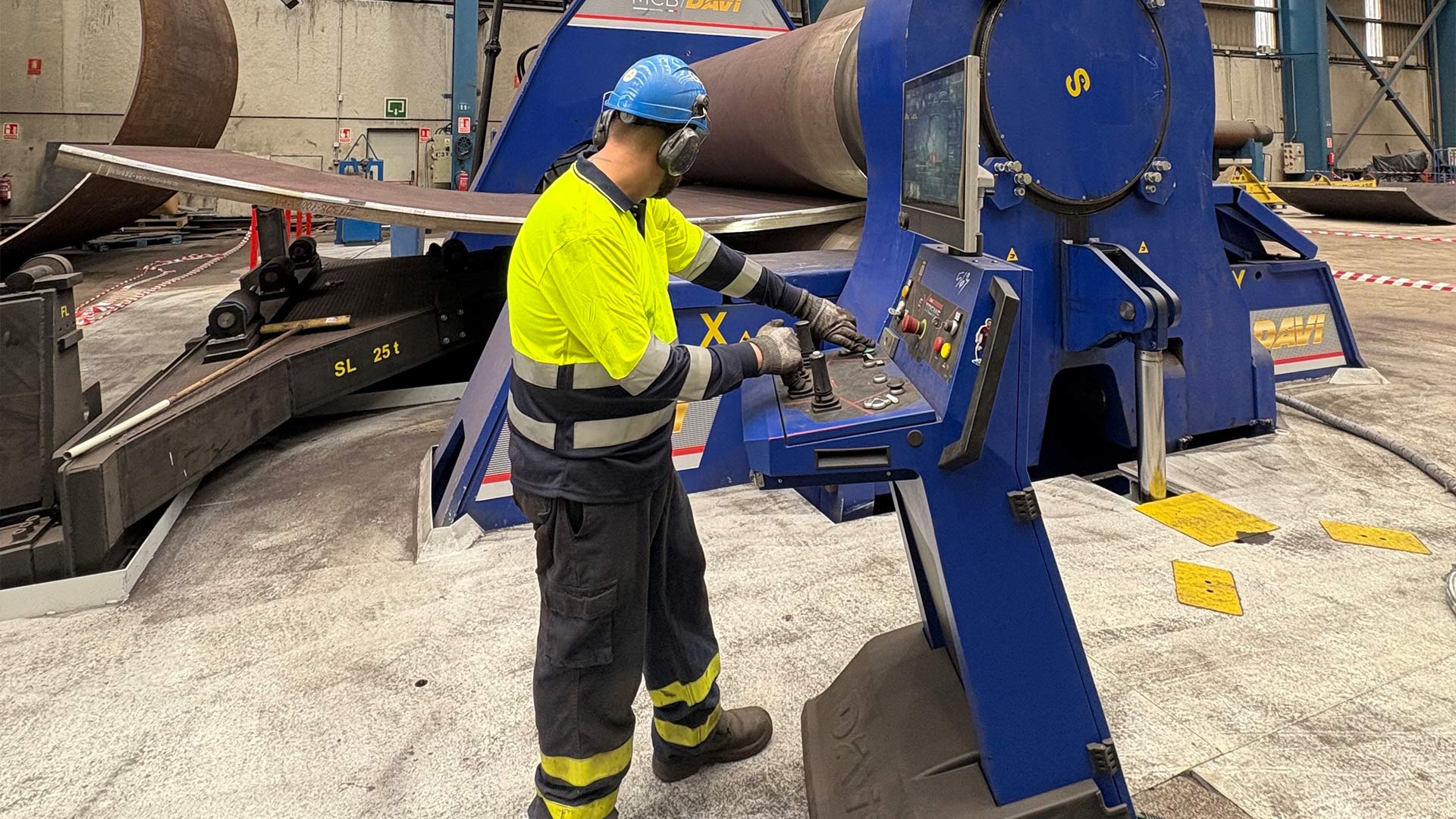
Plate rolling processes have advanced significantly with the transition from simple PLCs to true PC-based machine control operating systems. While PLCs solely manage machine inputs and outputs, PC-based CNCs handle larger and more complex computations that make plate rolling easier and faster. They also provide for more sophisticated control features and functionality. Most importantly, they allow for incorporation of AI.
In the past, PLC storage capacity averaged about 500 MB, limiting plate rolling machine controls to 10 generic material classifications based only on tensile and yield. Problems arose, however, when two materials were broadly similar, like stainless steel 304 and carbon steel, but differed significantly in their forming behavior.
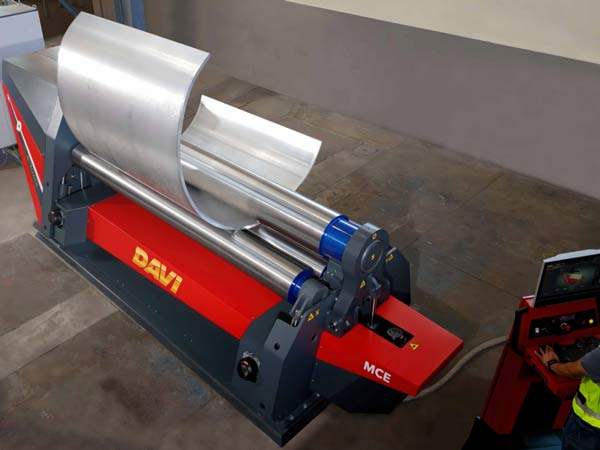
In these instances, machine OEMs assumed the materials would behave the same way during plate rolling. When they did not, any adjustment made to one material in the database would affect all those within the same group.
Because they are essentially PCs, today’s plate rolling controls incorporate drives with the latest available memory capacities. This additional storage means controls can have database tables specific to each material type, and fabrication shops can change those specifications without causing a ripple effect among similar materials. This gives operators much more processing power and individualized control over the rolling process.
Database development
With PC-based controls, shops can develop custom material specification databases that can be calibrated and updated to match forming requirements. This is especially beneficial for shops working with industries that often use custom-engineered, non-standard materials, including but not limited to nuclear energy, mining and aerospace sectors.
Extensive material databases allow shops to simply bring up a material and the control lists all the parameters for rolling it. For its plate rolling machines, Davi segments its control calculation tables into 15 sections, each based on the desired part radius as compared to the material thickness along with material width as compared to the machine’s length.
Operators then fill in fields for material type, tensile and yield to program a plate rolling job. They can then customize according to past job factors, such as material batch variation.
Once the material fields are filled, the operator enters the material thickness, width, length and desired radius. From there, the control generates the rolling program and runs it. Outside of the operator holding down two buttons, the machine progresses through the programmed rolling steps on its own. With control over each material type and its parameters, shops experience increased accuracy and output.
Shifting shapes
In addition, PC-based controls let shops roll various shapes that are traditionally extremely difficult to do with manual machines. One such shape is the “apple.” When rolling thick material jobs that require tight tolerances, shops over-bend the plate ends, which form the part into an overall apple shape, seam weld those ends, then re-roll the part to a perfect round.

Another rolling process tough to do manually is for multi-radius parts like transition sections and architectural steelwork. For these jobs, shops can use PC-based controls to easily generate them and any other combination of customized shapes. Operators simply enter the desired segment sizes for an entire part, and the control generates the program or indicates if a particular shape is impossible to produce.
Consider a shop that is still rolling multi-radius parts manually. They may have a job that requires a 3-in. section with a 10-in. radius, followed by a flat, then a 2-in. section with a 9-in. radius, another 2-in. section with a 7-in. radius and a final flat. For this job, the operator needs to physically mark the various areas on the material, then roll each section shape to those marks. Current plate rolling control technology not only accomplishes this very time-consuming process quickly and easily, but operators can verify each segment on the control screen to confirm they were rolled to the correct parameters.
Meeting modern needs
The capabilities and functionality of PC-based controls have lessened the need for highly experienced operators. Most importantly, however, when combined with AI, the controls catapult plate rolling closer to an autonomous process.
Today’s PC-based controls have led Davi to develop and incorporate technologies like the AI-Vision system for its line of all-electric plate rolling machines. This digital laser radius gauge transfers actual in-process measurements to the machine’s control. The control then automatically applies any necessary on-the-fly parameter tweaks to the rolling program in real time for achieving the desired radius. This level of technology is impossible with PLCs.
With AI-augmented in-process gauging, operators avoid the back-and-forth template measuring procedure that happens several times during a single rolling sequence. This not only speeds the process, but also significantly reduces the need and time involved for highly experienced operators to make those calculations and roll position adjustments. As a result, shops increase machine throughput and part accuracy.

Real-time tuning
In addition to the integration of AI, PC-based controls like the Davi iRoll eXtreme have led to other advanced functions. For example, the control’s interactive pre-production simulation function allows for real-time fine-tuning to decrease dependency on operators and ensure parts are correct from the first to the last.
Users of all skill levels readily identify with today’s PC-based plate rolling machine controls because they are similar to smart devices. Screen navigation is second nature for anyone who uses a smartphone or tablet. Experienced operators will also lean heavily on the PC-based controls for their data storage capabilities.
Whether experienced or new, all operators benefit from PC-based control technology and the incorporation of AI. The programming process is easier, faster and requires less operator intervention, while real-time, in-process gauging significantly improves part consistency.
Looking for more information about plate rolling and the latest technology that improves manufacturing? Go to our archives.


